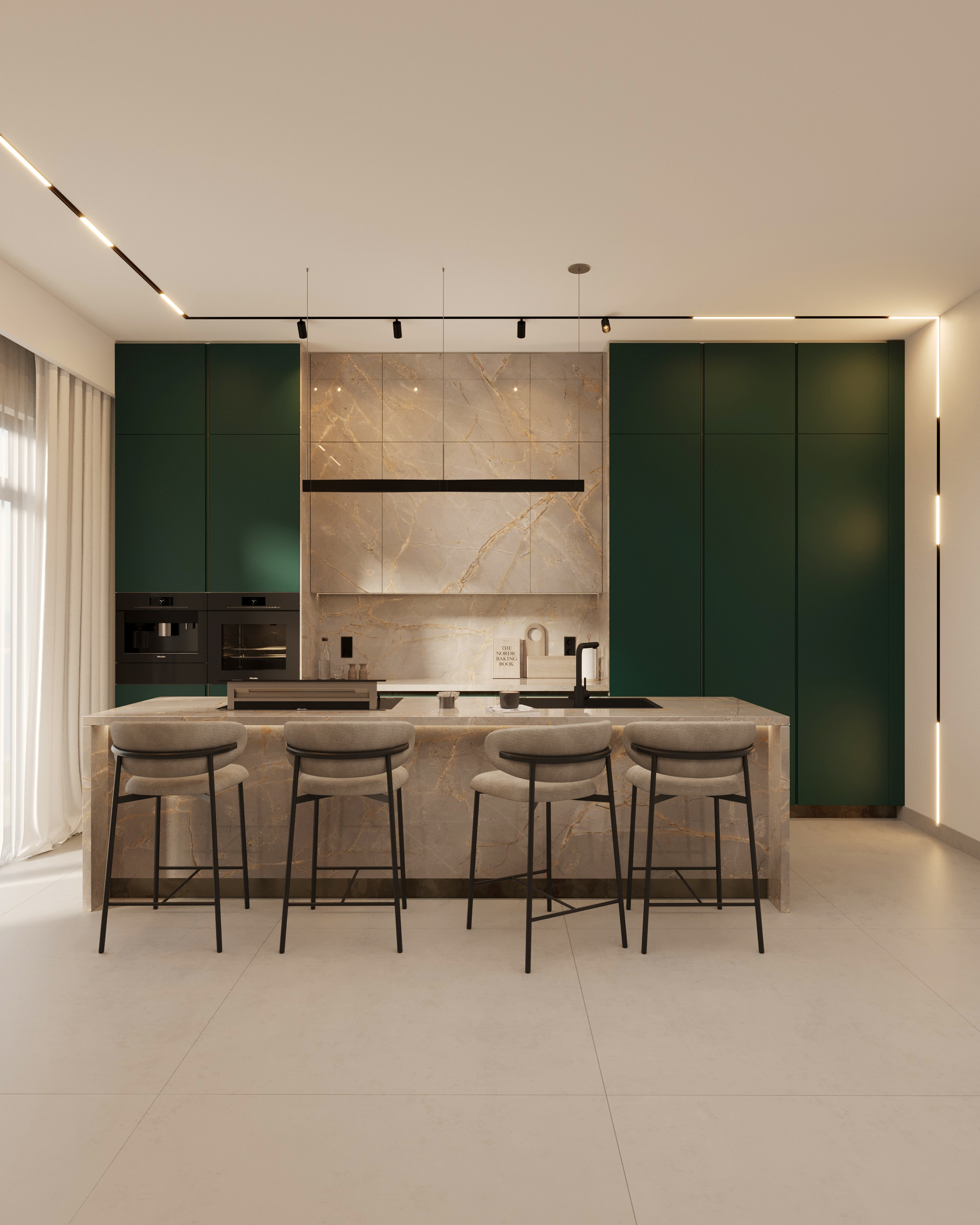
Lacquer Kitchen Design, Porcelain Countertop Technologies, and the Impact of Built-in Appliances on Spatial Integrity
In modern kitchen design, the evolution of material technologies has made both aesthetic and functional parameters decisive. In this context, lacquer surfaces, porcelain countertops, and built-in appliances constitute the fundamental components of contemporary kitchen spaces. The following study presents a schematic analysis of how these three design elements interact within the framework of spatial integrity, sustainability, ergonomics, and material performance.
1. The Role of Lacquer Surfaces in Creating Spatial Identity
1.1 Material Technology
Lacquer is a surface coating achieved by applying multi-layered filler, primer, and varnish onto a smooth-surfaced panel substrate (such as MDF), followed by high-heat or UV curing. It provides:
-
Homogeneous gloss/matte control
-
Micro-scratch resistance
-
Color stability
1.2 Aesthetic Impact
The relationship between lacquer surfaces and light directly affects the perceived volume of the space.
-
Gloss Lacquer: Expands narrow kitchens through its reflective effect.
-
Matte Lacquer: Creates a modern-minimalist atmosphere with a soft tactile effect.
1.3 Sustainability Perspective
New-generation water-based UV lacquer applications support sustainable production norms by minimizing volatile organic compound (VOC) emissions.
2. Structural and Aesthetic Performance of Porcelain Countertops
2.1 Material Composition
Porcelain countertops are formed by compacting derivatives of feldspar, clay, and quartz under high pressure and firing them at temperatures exceeding 1200°C. This production method allows the material to offer superior performance values such as:
-
Near-zero water absorption
-
High scratch resistance
-
UV resistance
2.2 Design Flexibility
Since porcelain panels can be produced in large dimensions, they enable:
-
Seamless surfaces
-
Minimal joint details
-
Surface alternatives with marble, concrete, or metal textures
2.3 Hygiene and User Comfort
Its non-porous structure makes it ideal for kitchen hygiene due to its anti-bacterial properties. High heat resistance facilitates the use of hot cookware directly on the surface.
3. The Impact of Built-in Appliances on Spatial Integrity
3.1 Spatial Integration
Built-in appliances are systems created by integrating devices such as ovens, hobs, dishwashers, and refrigerators into furniture carcasses. This approach ensures:
-
Spatial cohesion
-
Surface continuity
-
Design with minimalist lines
3.2 Ergonomic Planning
The "work triangle" principle is essential in the selection of built-in products. Optimizing the distances between:
-
The sink
-
The hob
-
The refrigerator
makes the user movement flow more efficient.
3.3 Energy and Sustainability
Energy efficiency is enhanced in new-generation built-in products through:
-
A+++ energy class options
-
Heat recovery systems
-
Smart sensor technologies
4. Design Synergy Created by the Three Components
4.1 Color and Texture Harmony
The monochrome structure of lacquer surfaces can achieve an effective contrast with the natural stone textures of porcelain countertops. The black glass, matte inox, or copper plating options of built-in appliances complete this composition.
4.2 Schematic Analysis of Structural Harmony
Table A: Material Interaction Matrix
| Component | Aesthetic Impact | Technical Impact | Sustainability Impact |
| Lacquer | Surface integrity, color dominance | Scratch and UV resistance | Low VOC emissions |
| Porcelain | Natural textures, massive appearance | High durability | Long service life |
| Built-in | Minimalist look | Ergonomic usage | Energy efficiency |
5. Conclusion
Lacquer surfaces, porcelain countertops, and built-in appliances create an aesthetic, functional, and sustainable unity in contemporary kitchen design. When the color and light control of lacquer surfaces, the durability-oriented structure of porcelain countertops, and the minimalist integration of built-in products come together, a high-performance and timeless kitchen architecture becomes possible.
This trio serves as the fundamental building blocks for creating a living space in modern kitchens that is long-lasting, hygienic, integrated, and aligned with current design trends.