Design decisions that transform the space
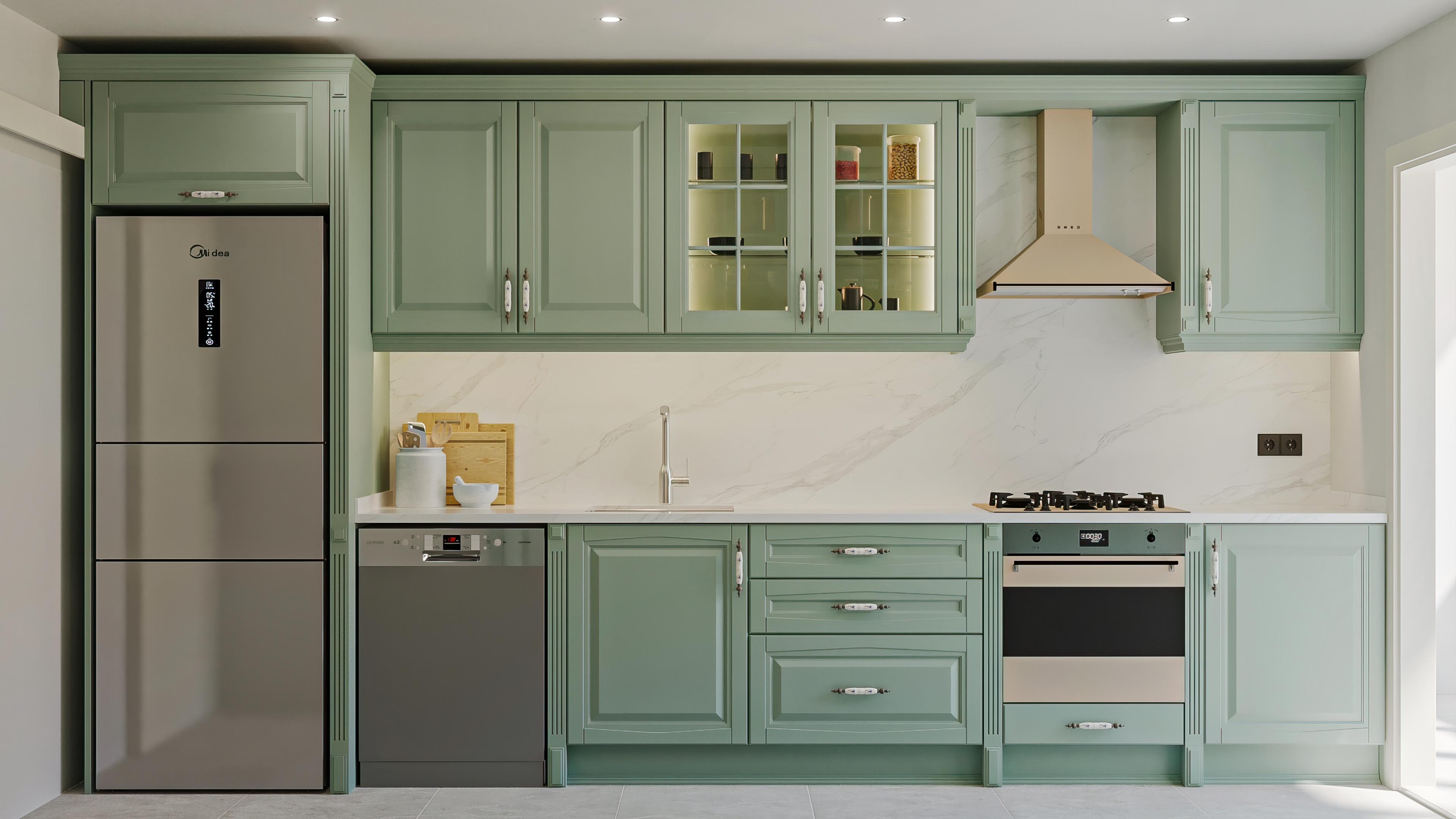
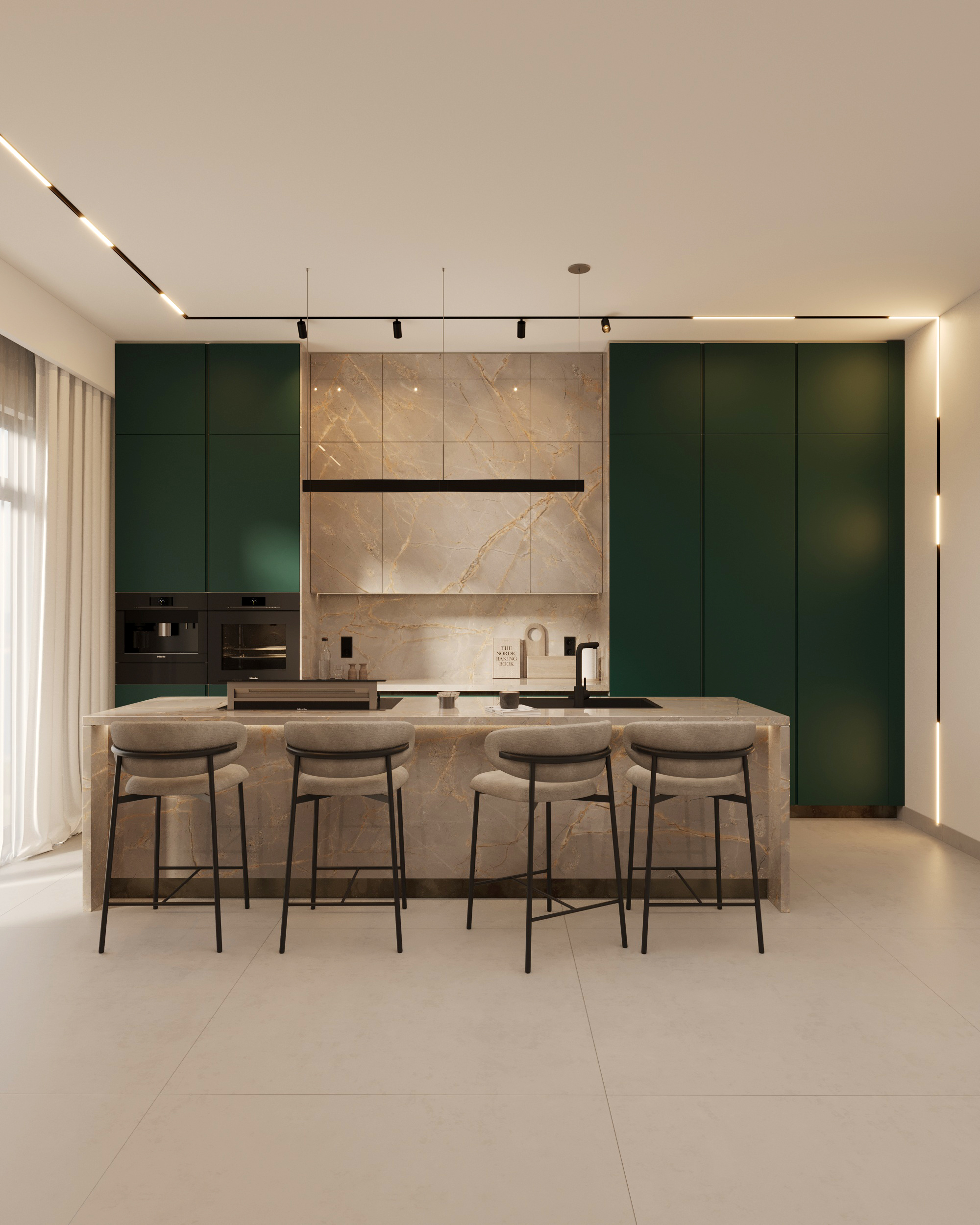
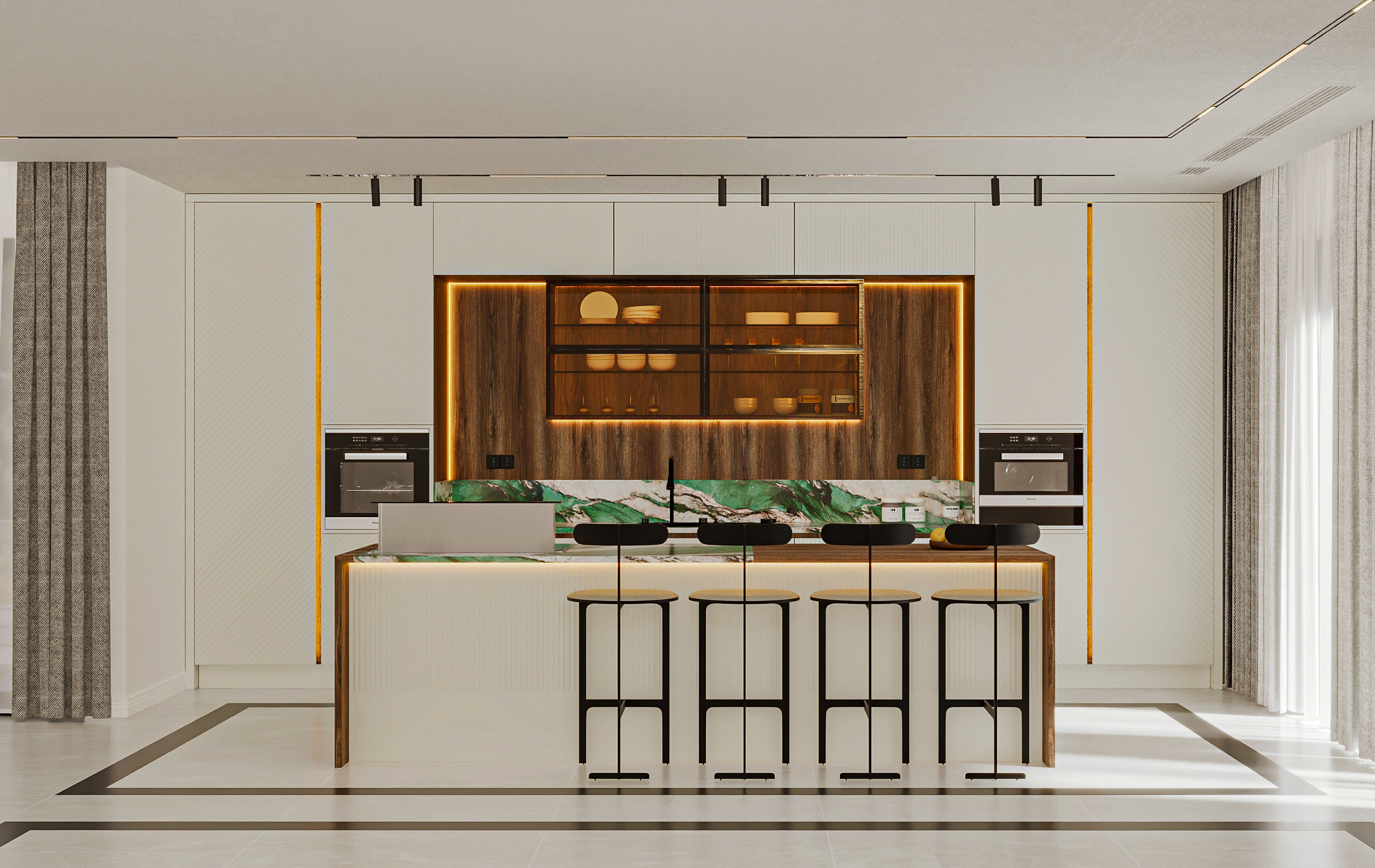
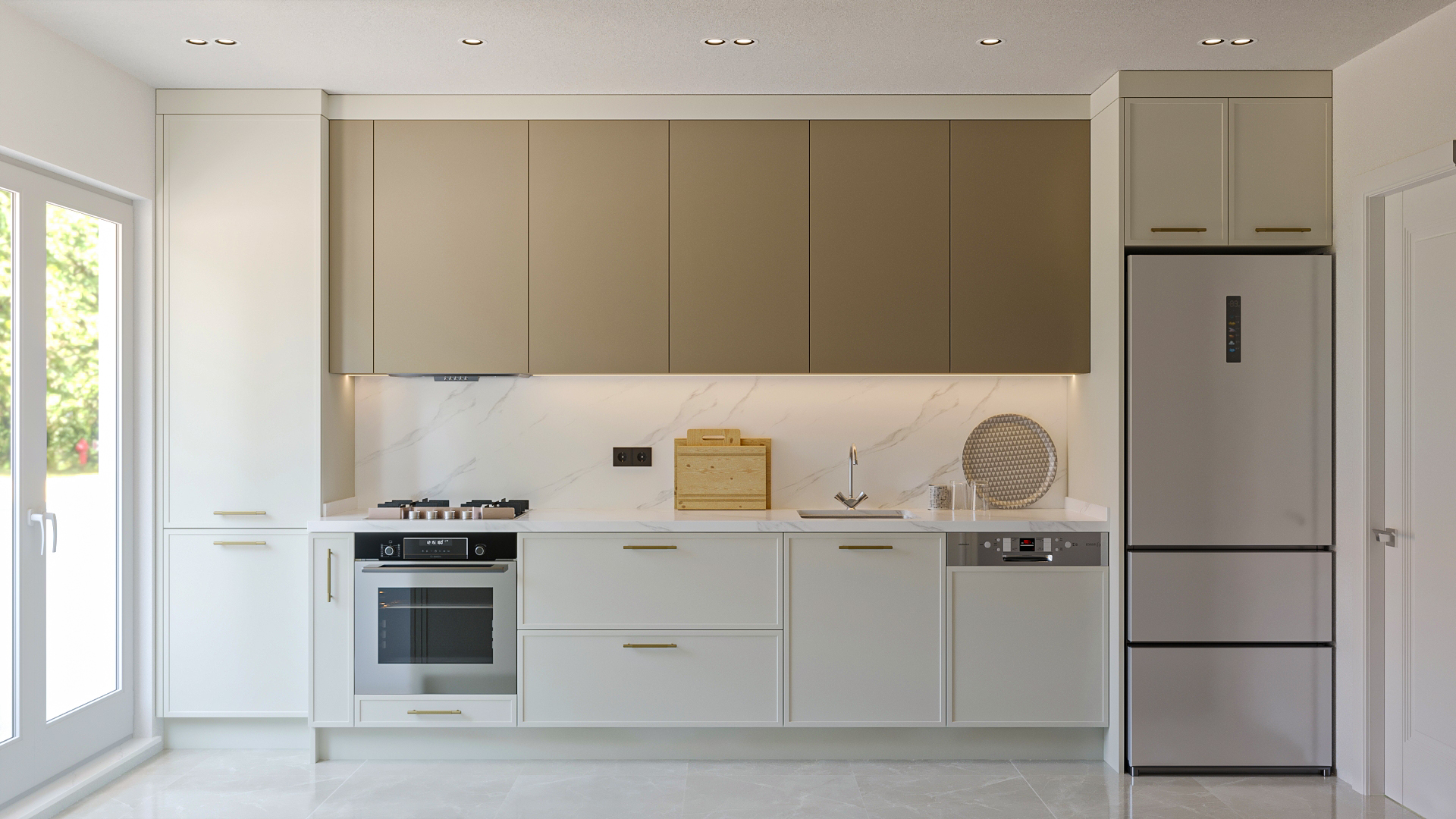
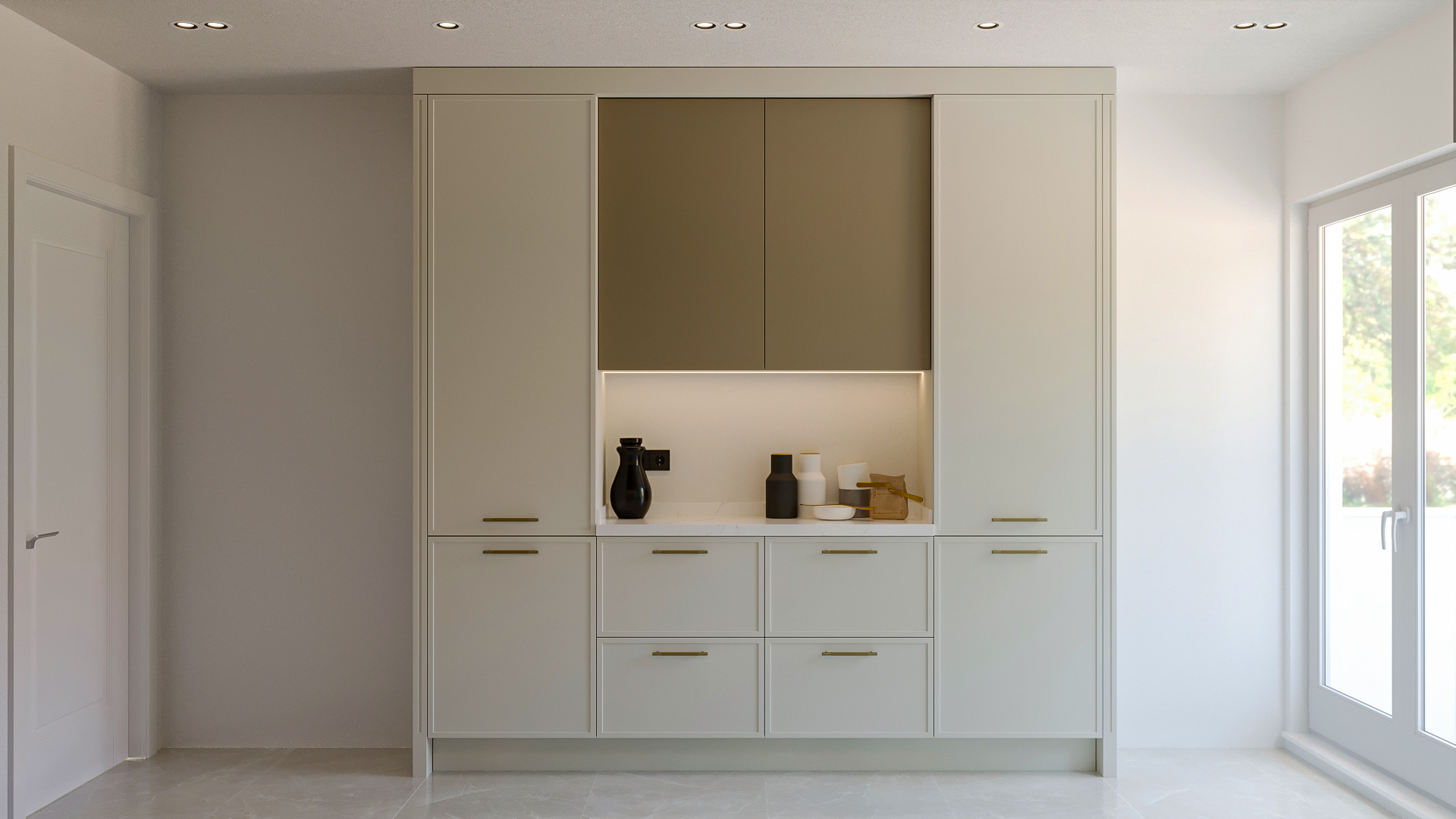
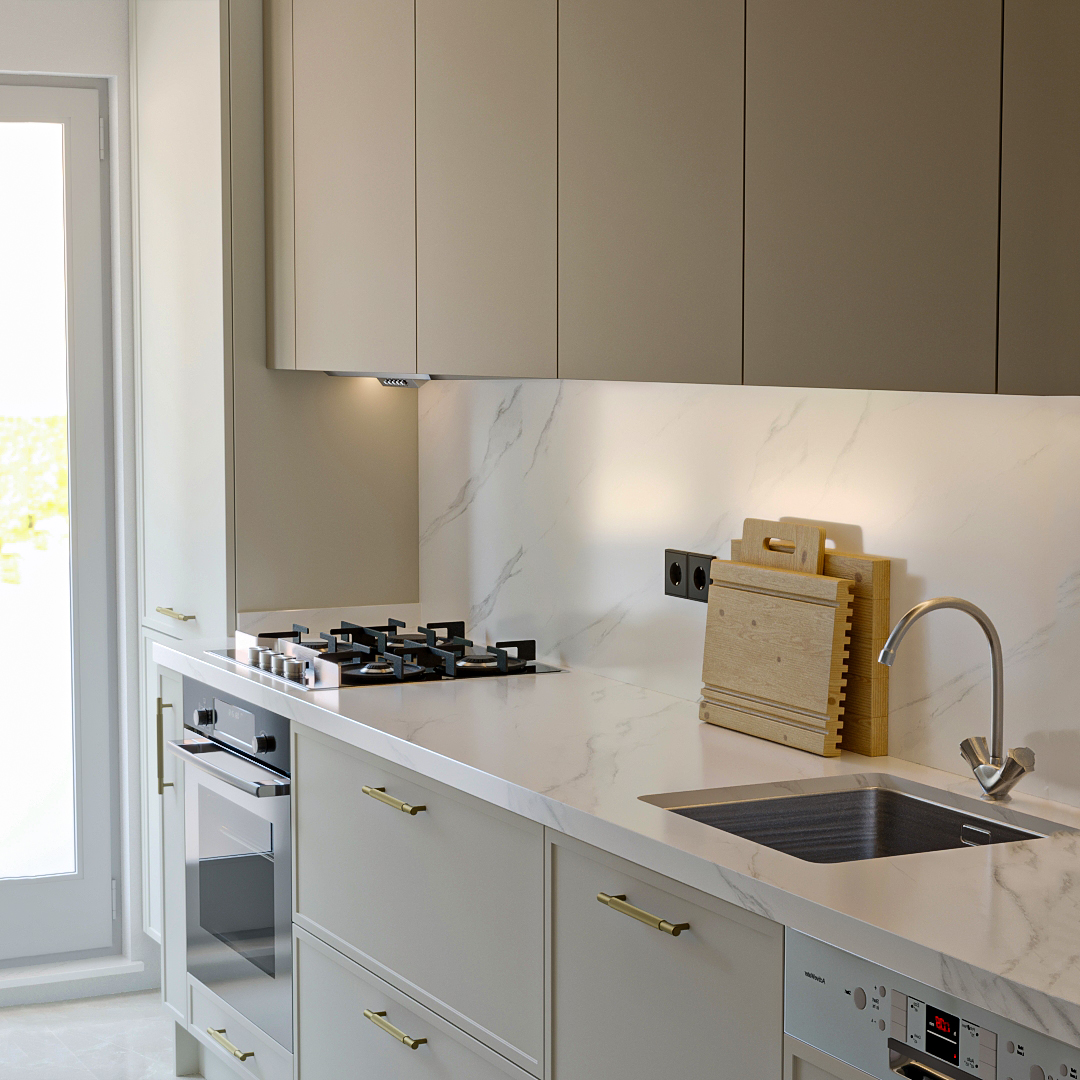
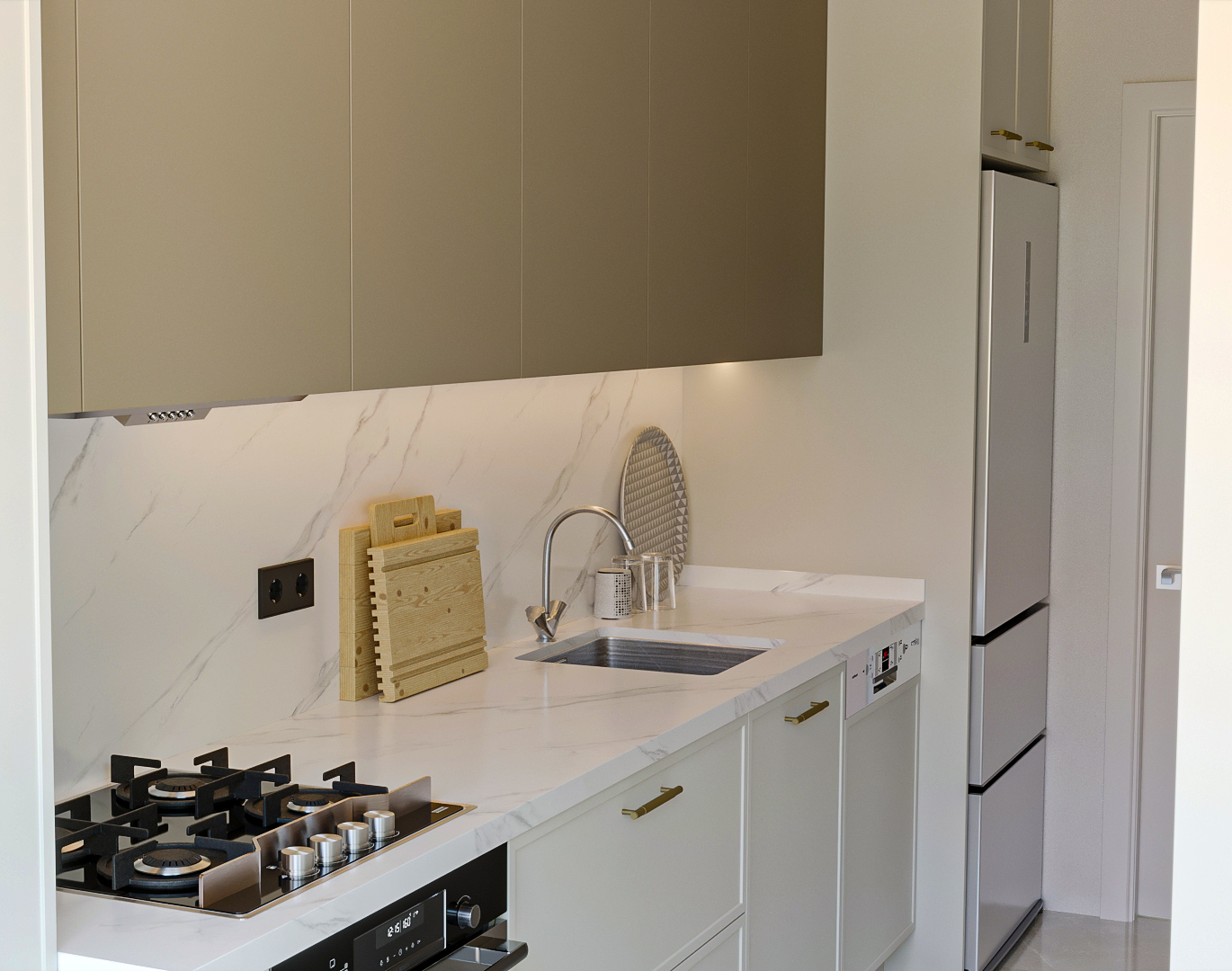
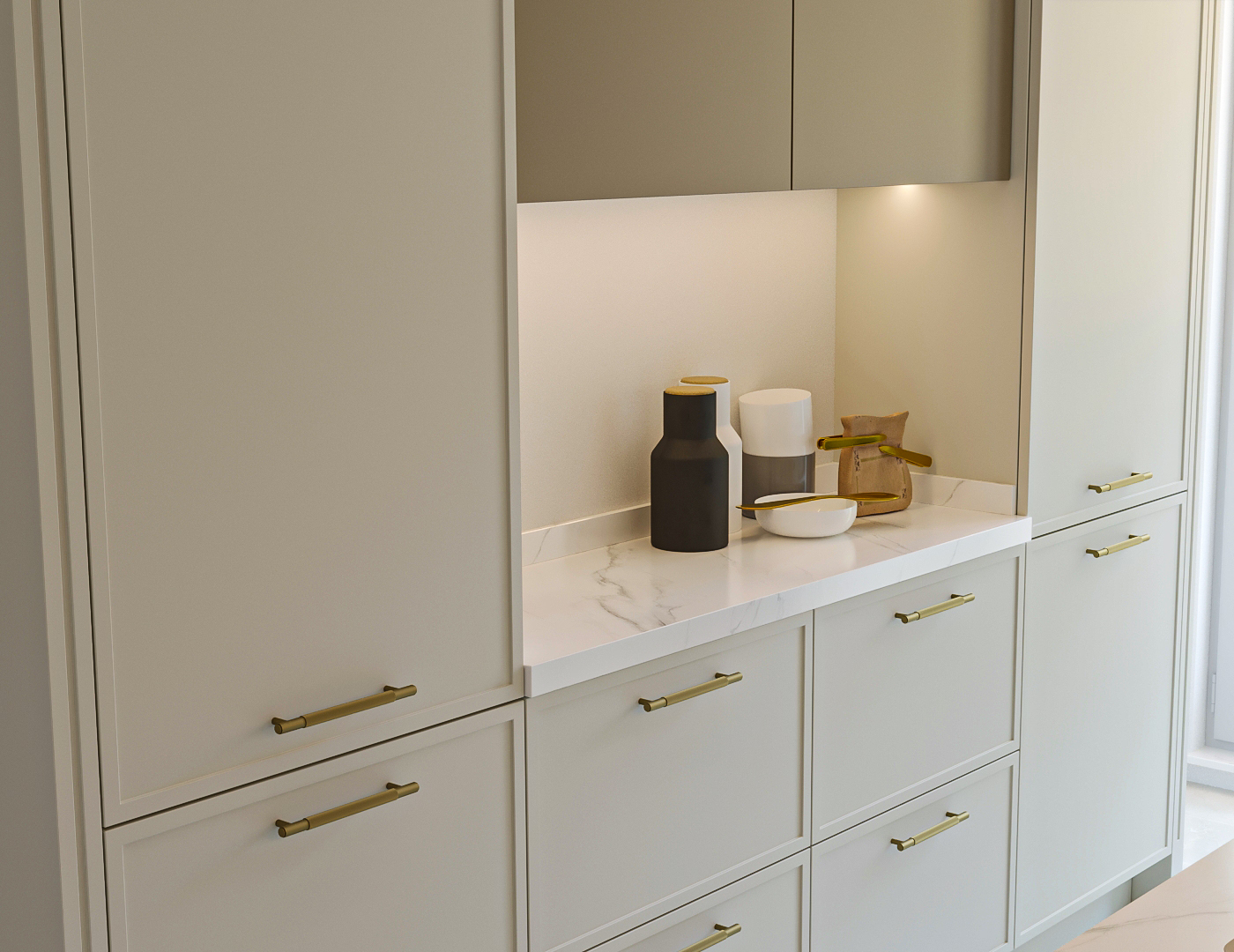
Contrast Kitchen is a kitchen design that creates a strong visual impact between colors and surfaces in modern interior architecture. The clarity of glossy lacquer surfaces and the balanced opposition of dark and light tones turn this project into not only a functional space but also an aesthetic and rhythmic composition.
Design Philosophy
Contrast in the kitchen is not only about colors; together with form, material, and light, it defines the character of the space.
In this kitchen, contrast is created through the following aspects:
- The opposition between light and dark tones
- The reflection of light on the glossy lacquer surface
- Chromatic balance through the texture of the quartz or porcelain countertop
- Simplicity on the fronts + accent points
This approach provides both a calm stance and visual dynamism in the space.
Material Strategy – The Sources of Contrast
Glossy Lacquer Surfaces
- Smooth, glossy lacquer cabinet doors are the foundation of modern aesthetics: they reflect light, sharpen surfaces, and bring spaciousness to the space.
- Lacquer surfaces, with their wide range of colors, are a powerful tool for creating tonal contrast.
Color Contrast
In a contrast kitchen, the following color relationships are generally found:
- Dark lower cabinets + light upper cabinets → Visual depth and balance
- Light countertop + dark fronts → Spaciousness with emphasis
- Dark wall panel + light floor → Striking rhythm
Color contrast makes the space appear more dynamic and sophisticated.
Quartz / Porcelain Countertop
- A quartz or porcelain countertop combines high durability, stain and scratch resistance with aesthetic performance.
- In contrast projects, white or light tones are generally balanced with dark lacquer surfaces.
Cabinet Body: MDFLAM or Durable Systems
- Stable body systems such as MDFLAM under lacquer cabinet doors technically support surface performance.
- The body material preserves surface contrasts while ensuring long-lasting use.
Spatial Effect – Light & Depth
Contrast design:
- Directs surface reflections,
- Increases spatial depth,
- Provides a balanced visual rhythm at eye level.
While light tones increase spaciousness, dark tones add depth and clarity; this opposition creates a dynamic yet balanced atmosphere.
Ergonomics & Use
- Built-in integration provides an orderly and quiet surface language on the front.
- Storage areas are balanced between lower and upper cabinets; contrast colors emphasize functional zones.
- The work triangle (cooktop–sink–refrigerator) is designed with an ergonomic and fluid setup.