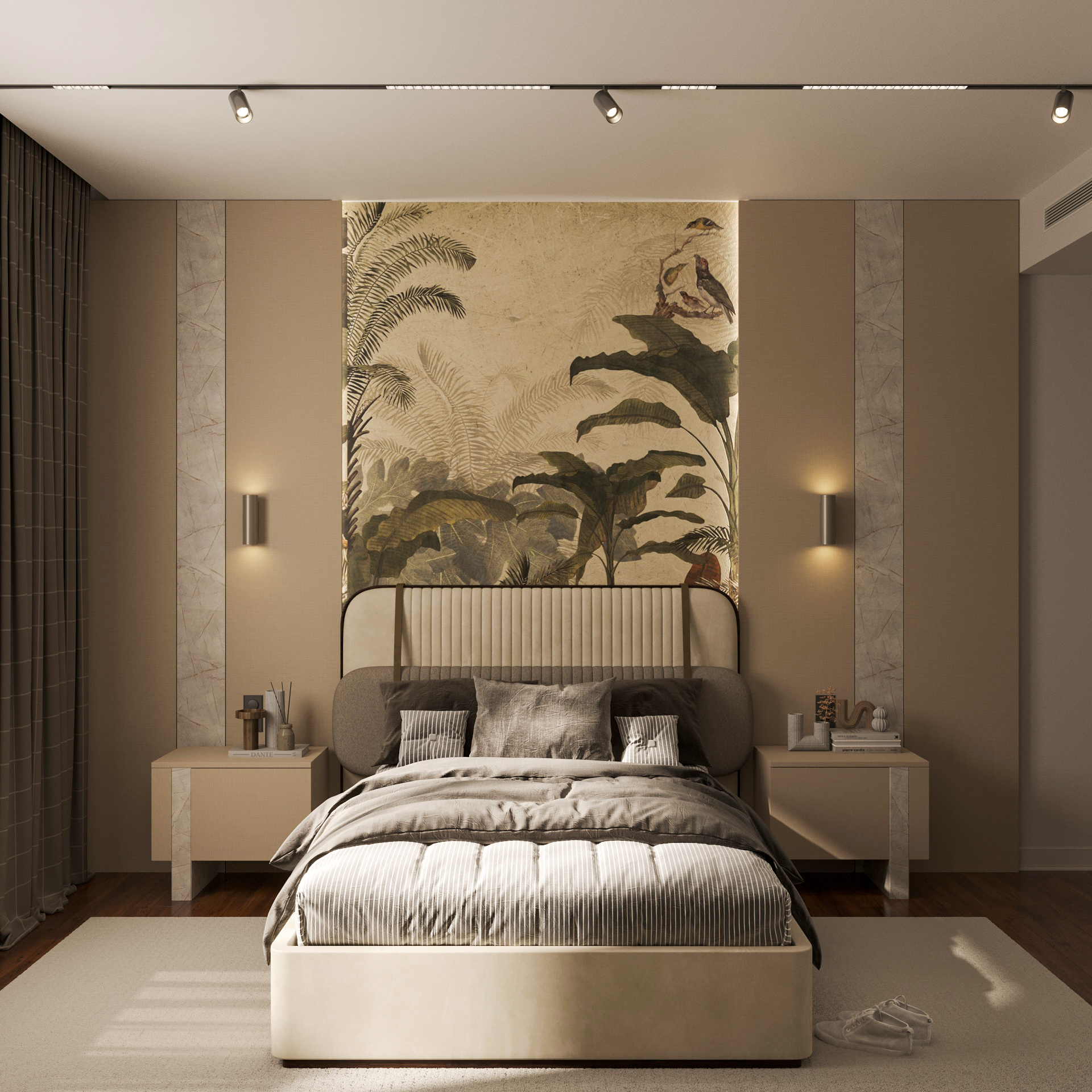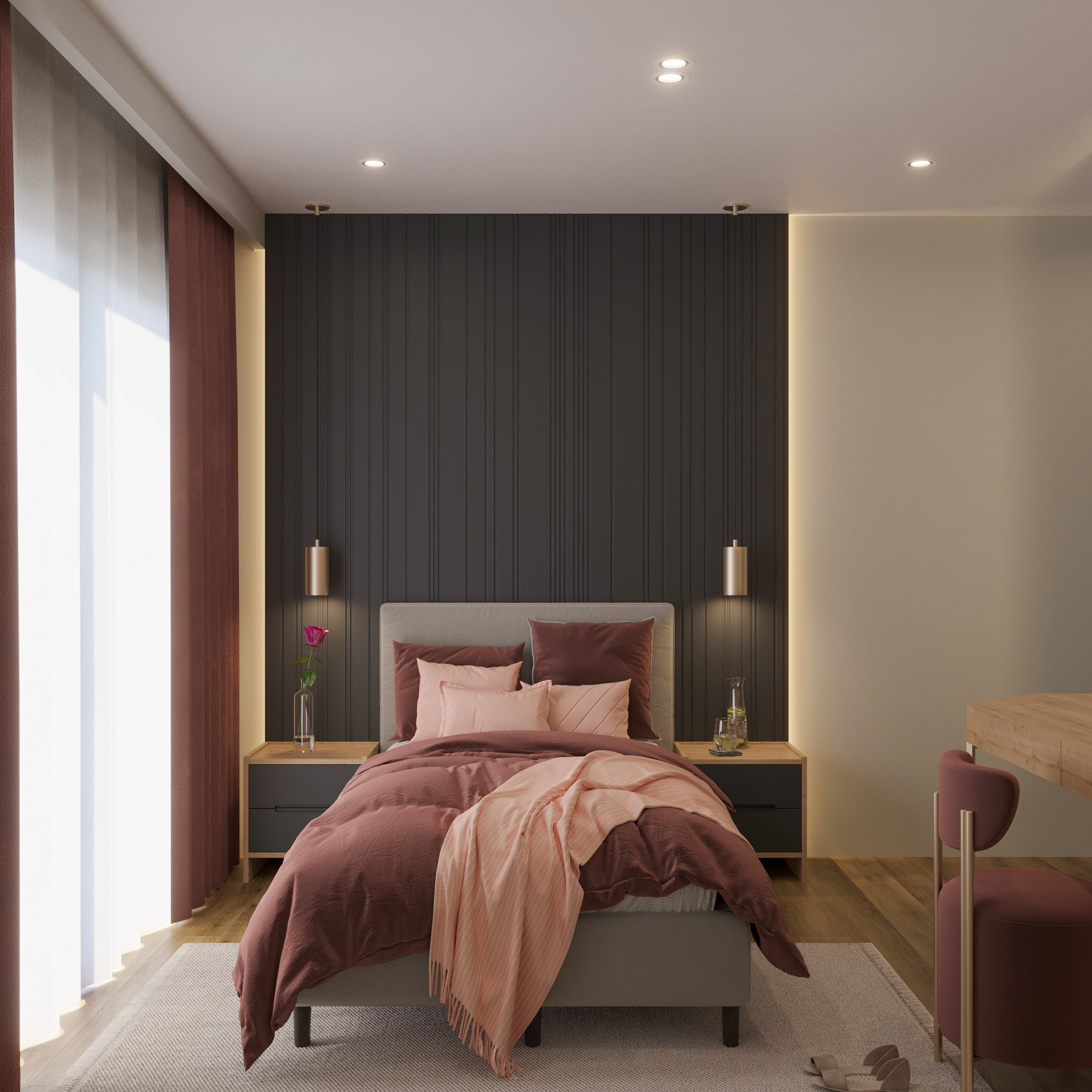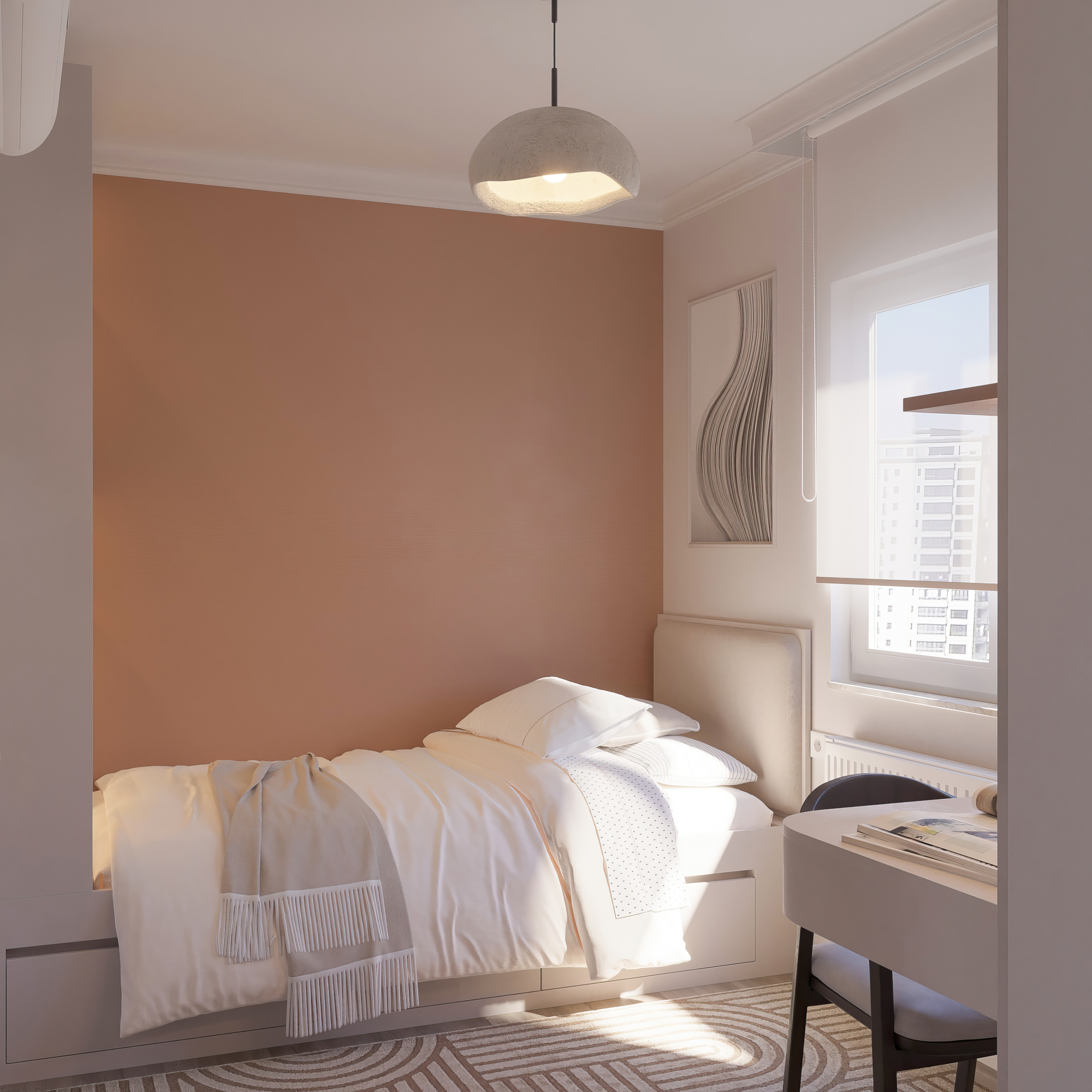
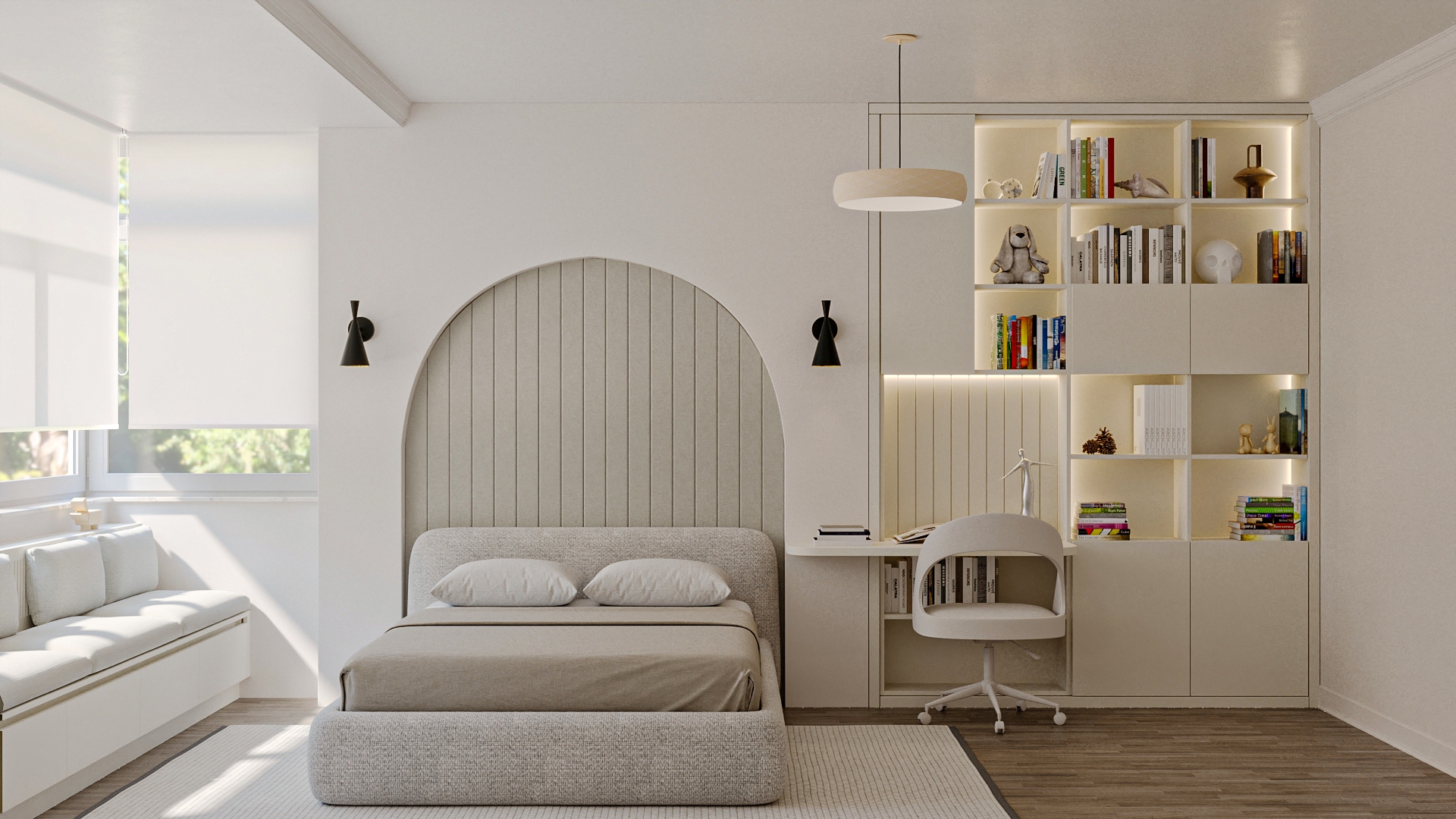
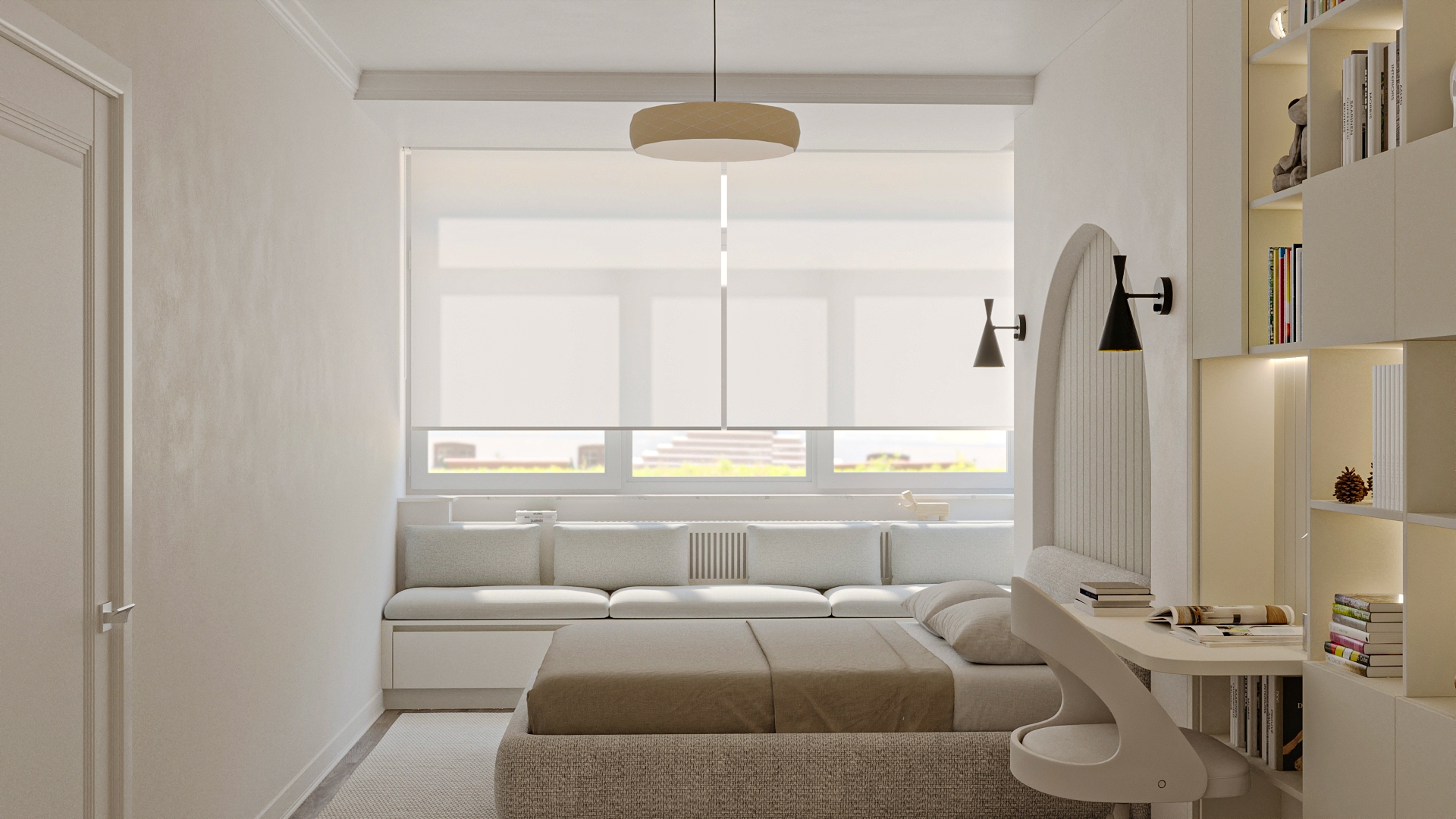
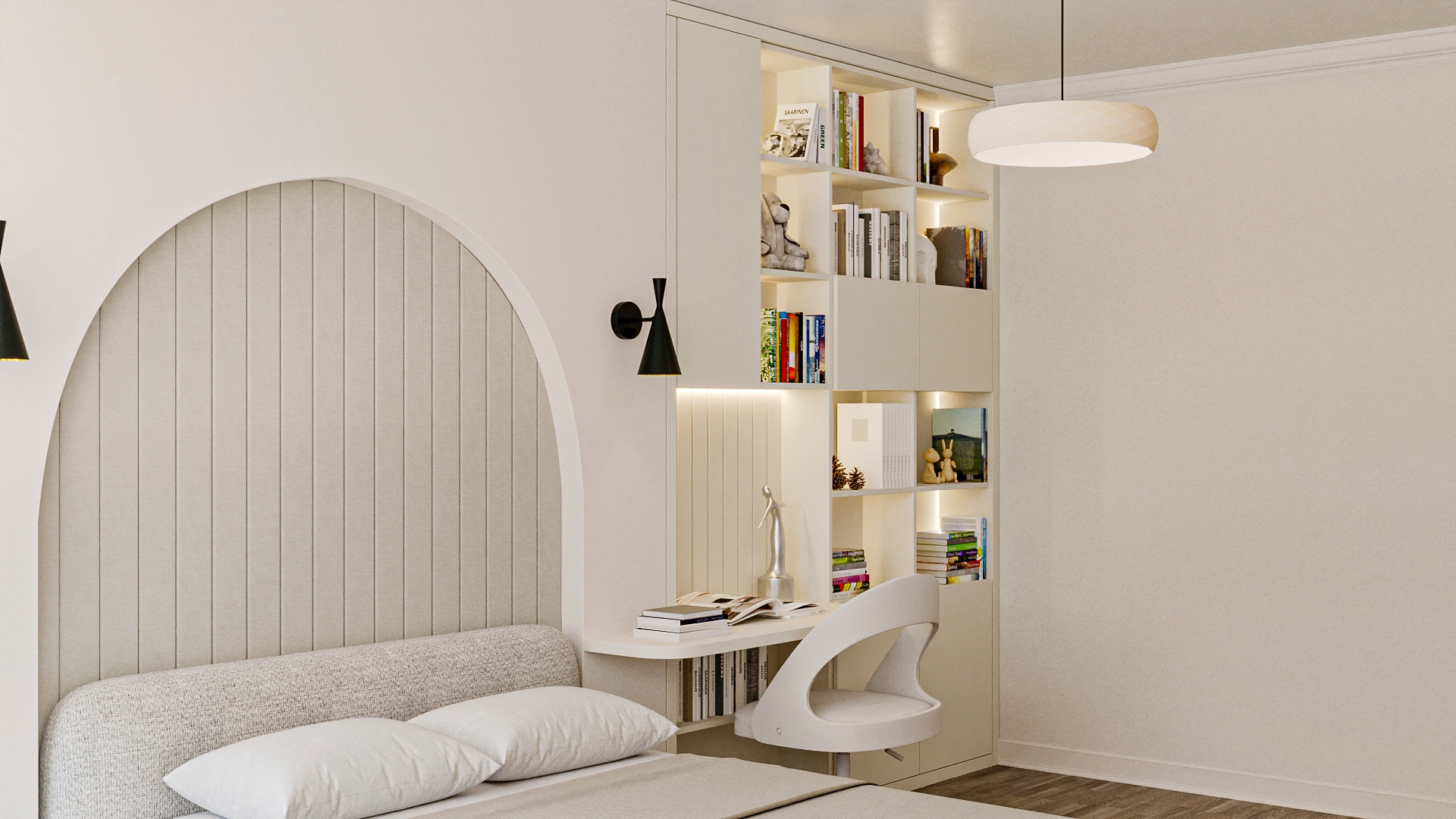
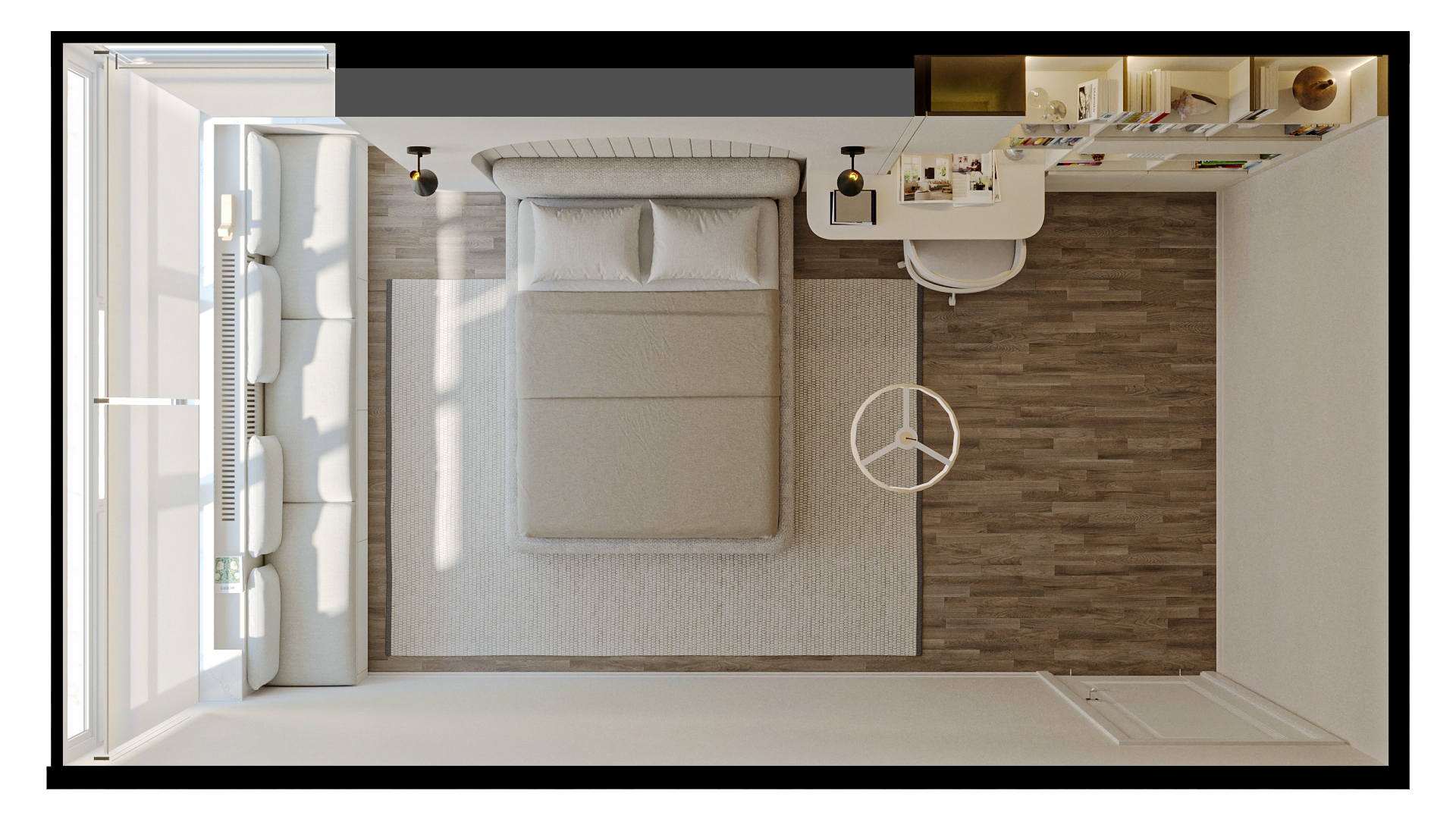
The youth room is designed not only as a sleeping area but as a living space used during a large part of the day, offering personal comfort, study, and resting experience together. This project is shaped with a balanced composition, ergonomic layout, and minimalist aesthetic approaches while clearly defining the functions of the space.
Functional Zoning:
The room separates main functions such as sleeping, studying, storage, and resting within itself. This increases spatial efficiency while supporting the daily rhythm for the young user.
Minimal and Modern Language:
In furniture selection, simple surfaces, clean lines, and neutral tones are preferred. This approach facilitates focus by preventing distraction from external stimuli.
Balance Between Aesthetics and Usability:
Balance is provided not only visually but also spatially: the study area is ergonomic, the sleeping area is comfortable, and storage areas are separated according to needs.
Light and Atmosphere:
Natural light control and artificial lighting balance are among the main components that increase the quality of life. Soft light blended with neutral tones provides calmness to the space.
Timeless Design:
Minimalism and contemporary form language present a long-lasting living space rather than a “trend space.”