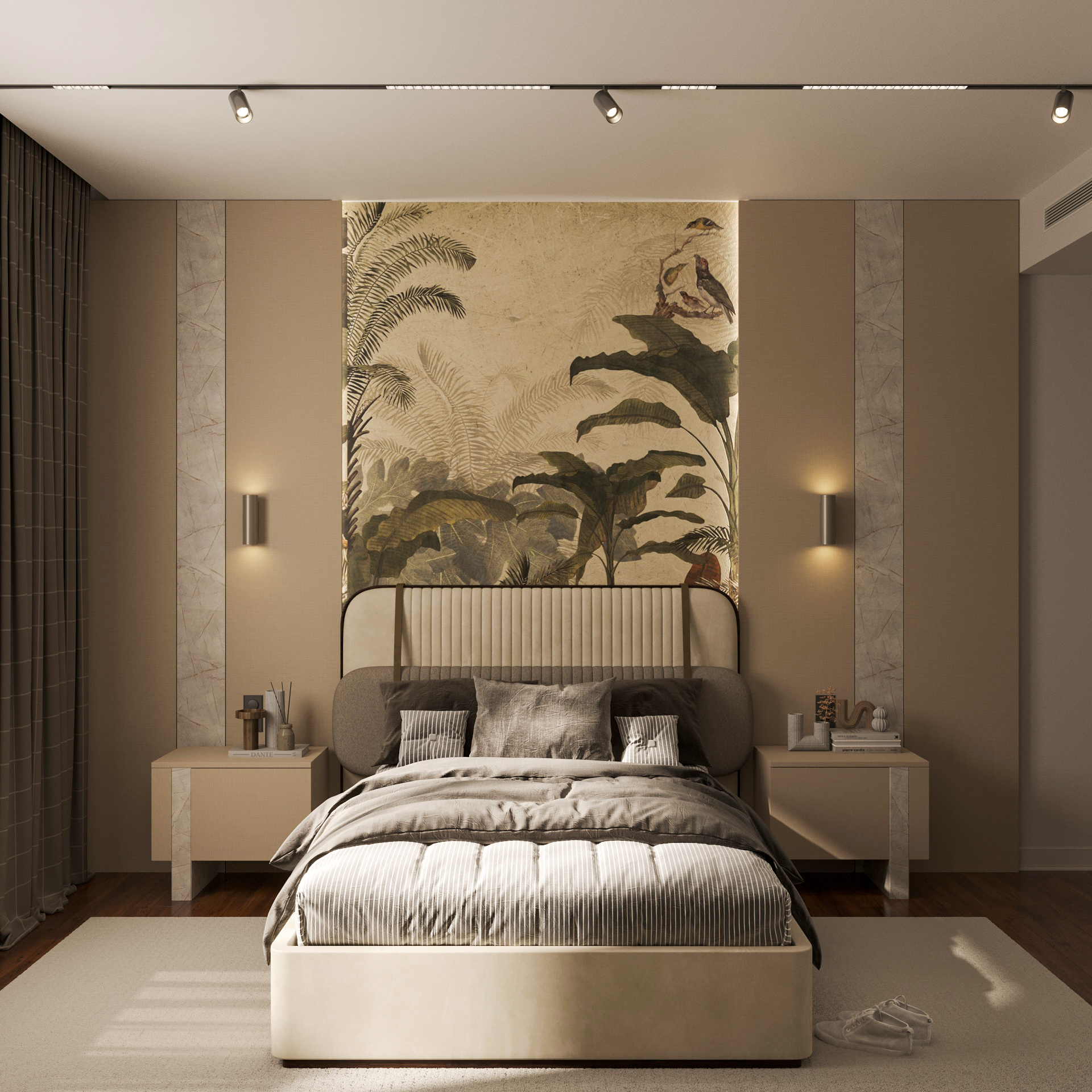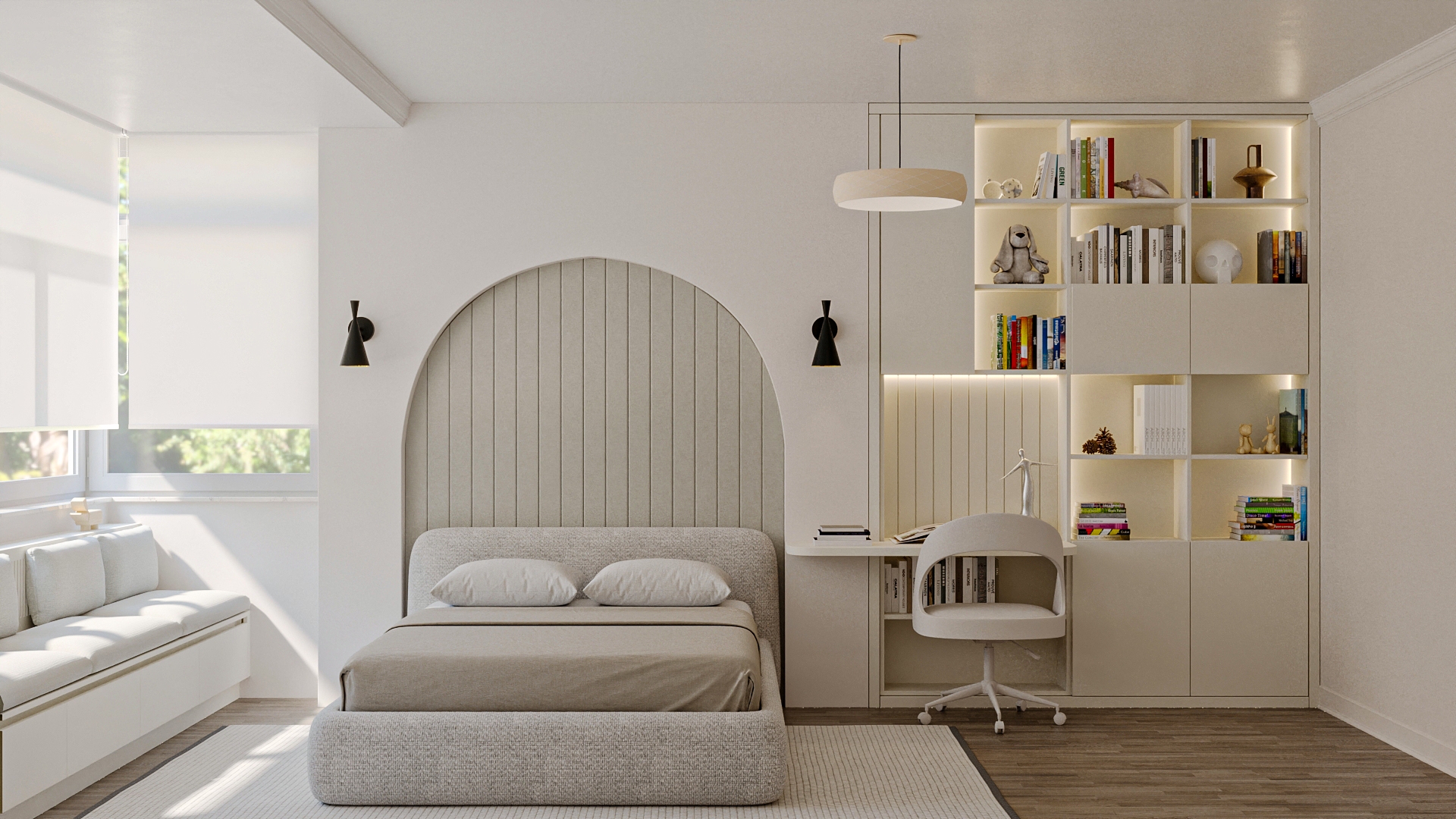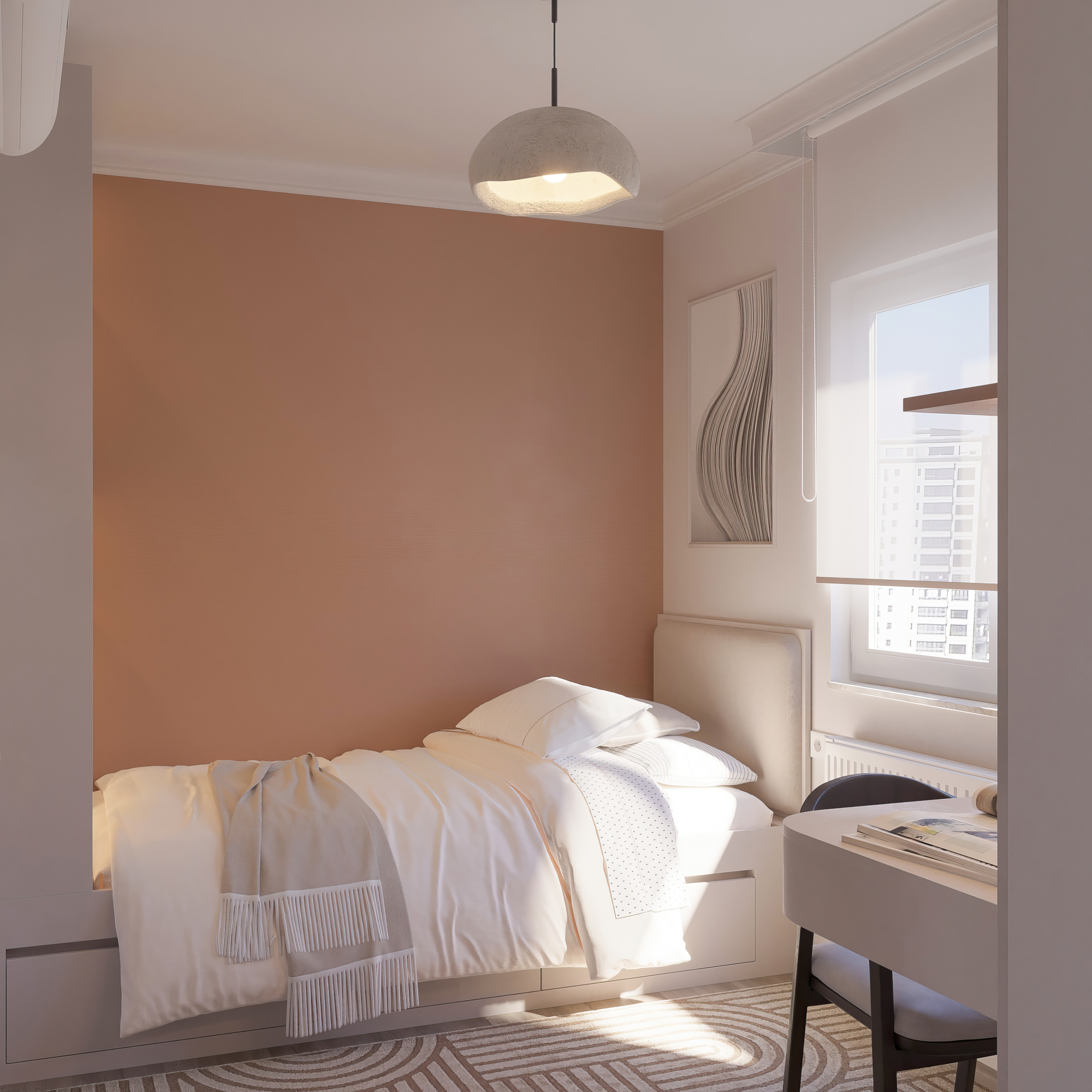
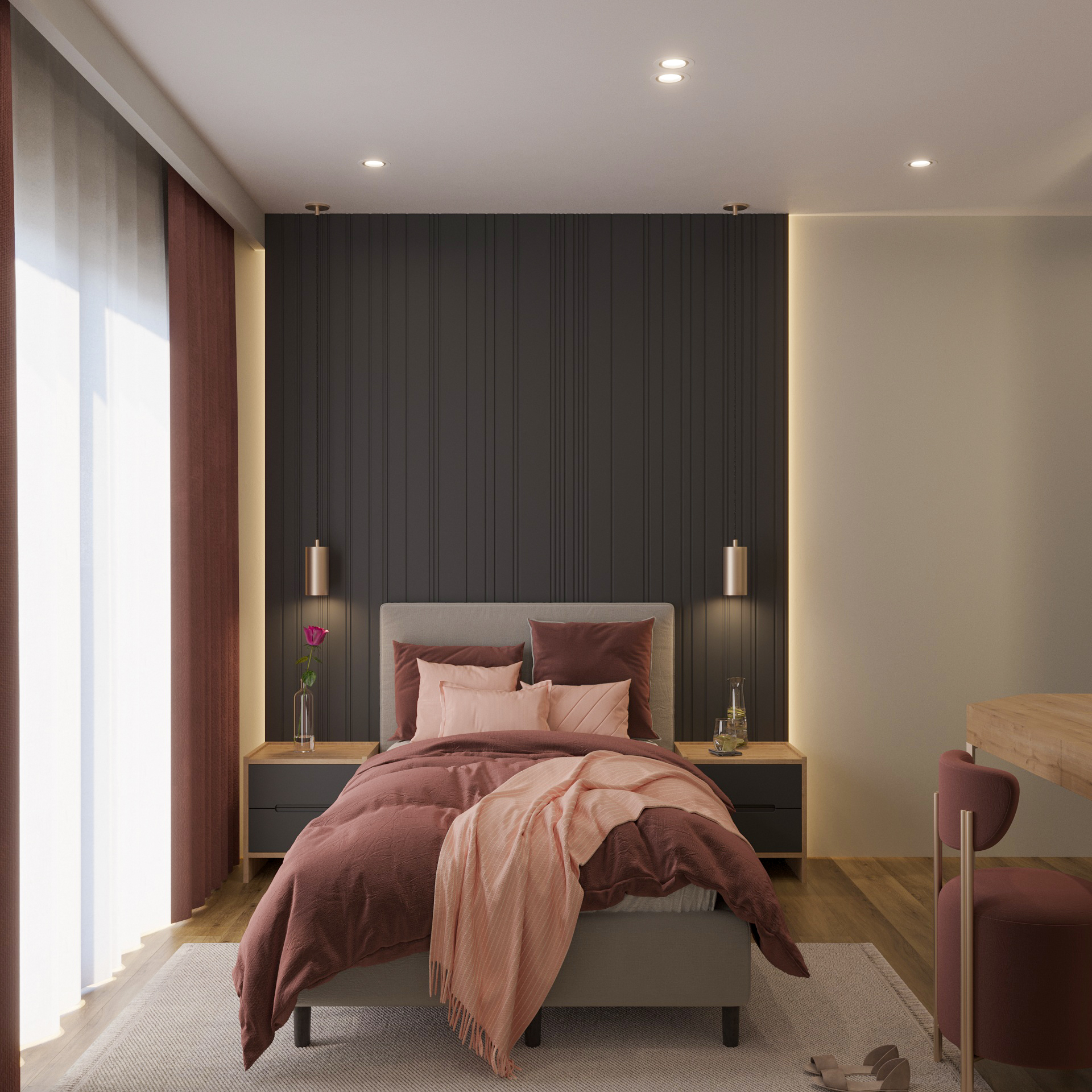
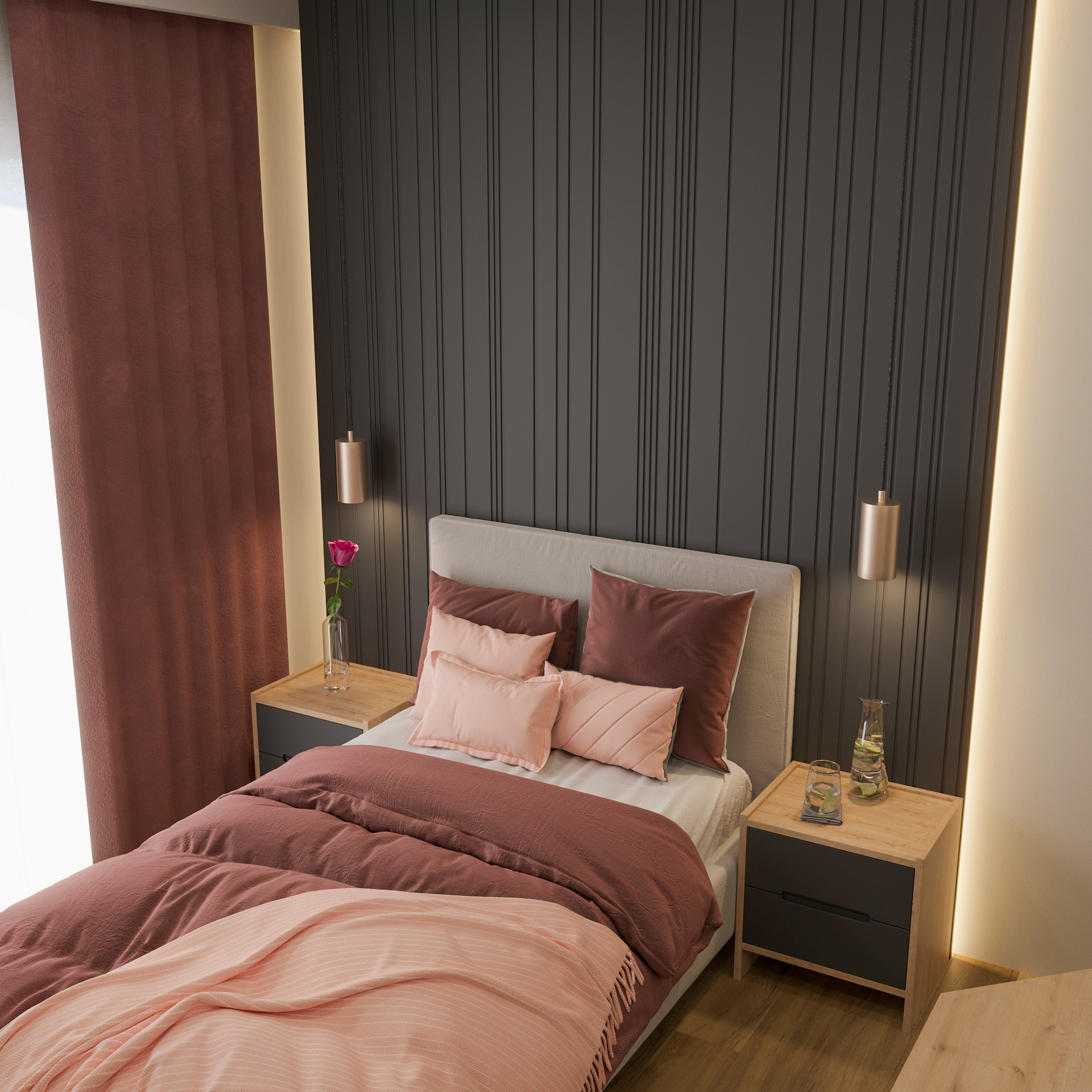
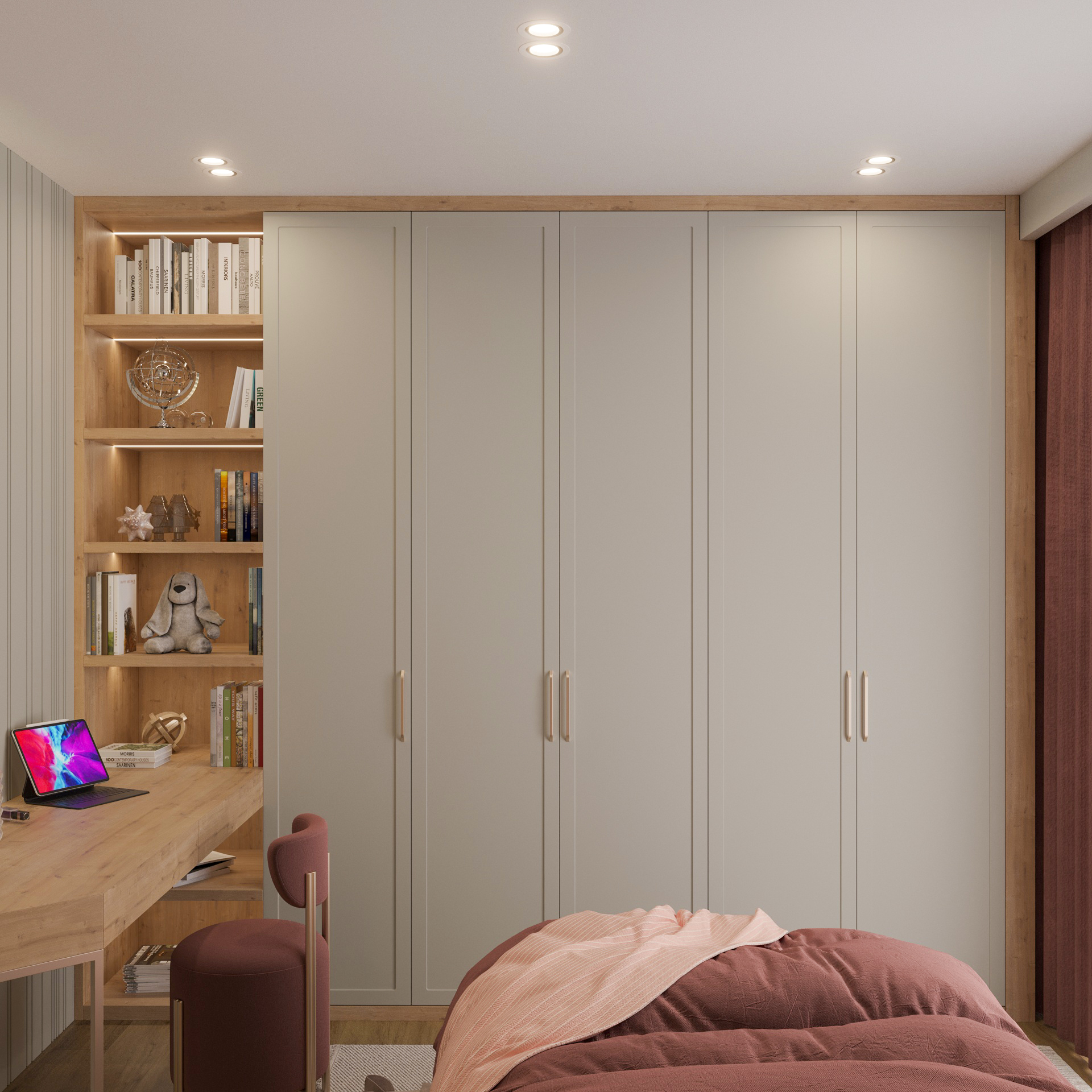
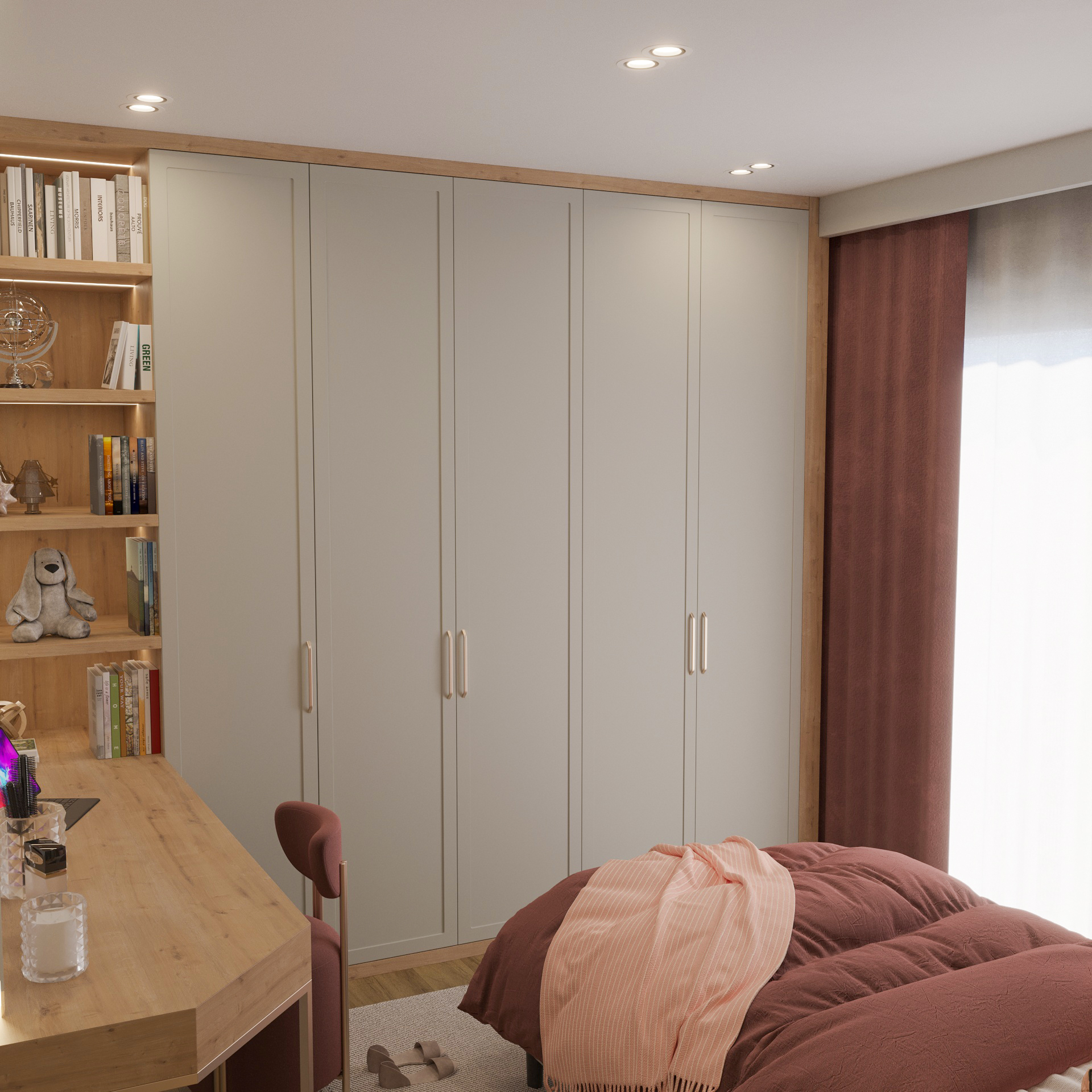
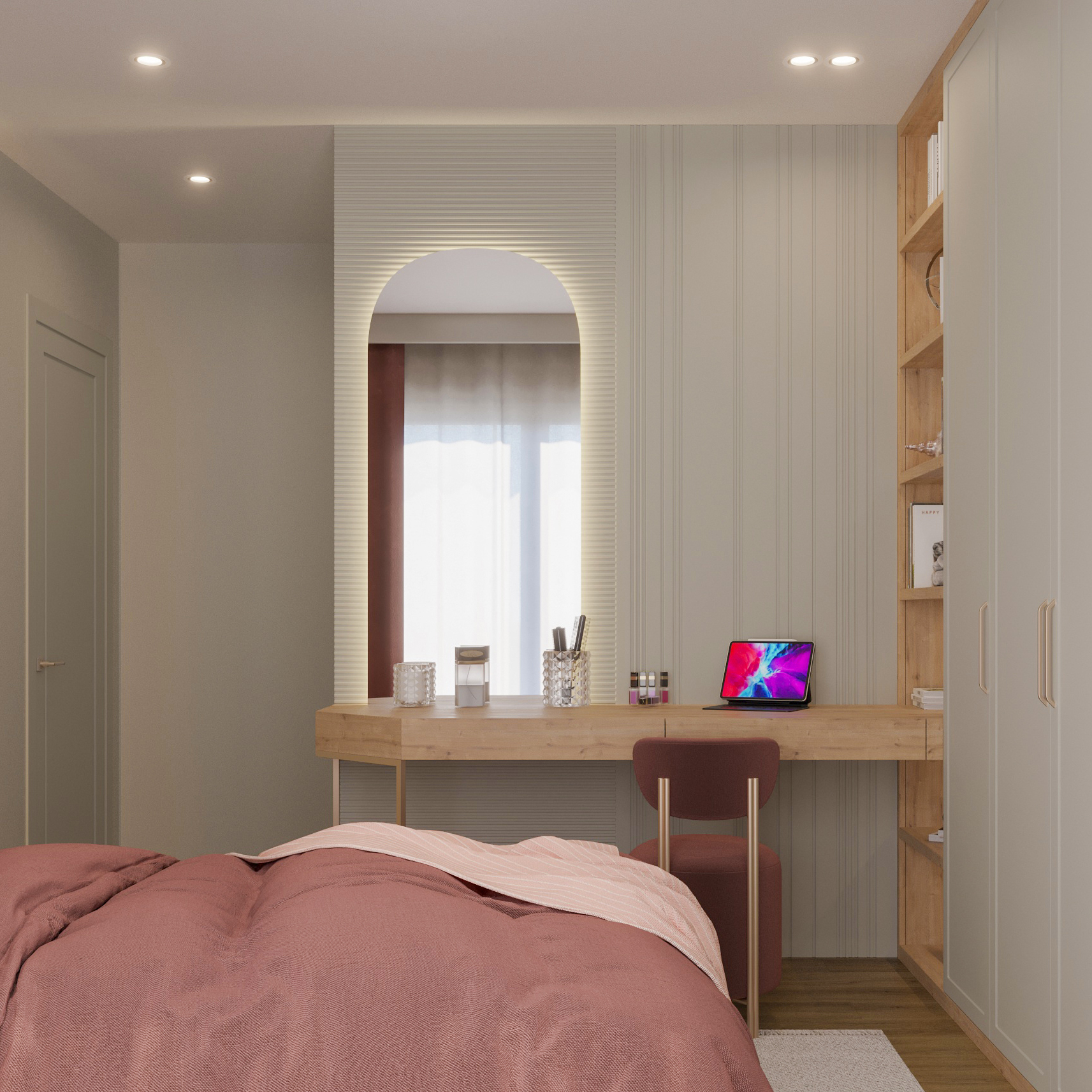
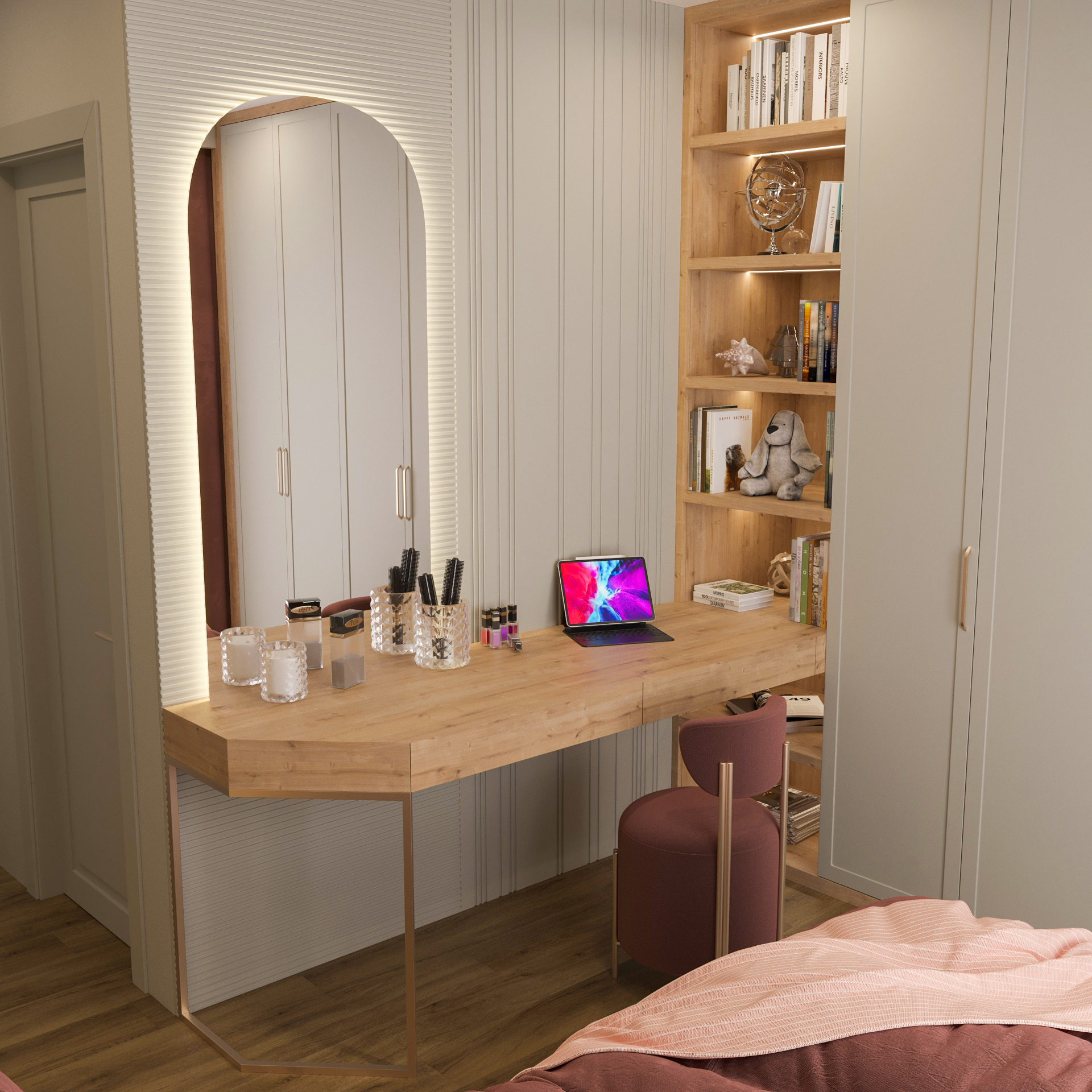
Strawberry Youth Room appears as a calm yet impressive interior design that encompasses the living space of young users both functionally and aesthetically. This project is a modern youth room example that combines color, texture, furniture layout, and daily usage habits in harmony.
Strong Design Language and Fluid Spatial Use
This youth room design is based on visually clean lines, consistent material selection, and functional flow. The overall palette is generally kept in a tone that shifts from neutral to light colors, making the space feel spacious and open. By avoiding visual clutter or excessive ornamentation often seen in youth rooms, a simple yet strong architectural stance is preferred.
Comfort + Efficient Use
The furniture layout in this room focuses on the needs of the young user:
- Sleeping area provides a restful comfort; bed placement creates the focal point
- Study area is positioned to receive natural light and supports focus
- Storage units are functional but do not visually overwhelm the space
This approach transforms the youth room from just a sleeping space into a multi-functional living area.
Minimalist and Timeless Aesthetics
“Strawberry Youth Room” adopts a design language suitable for long-term use with minimal lines and a timeless palette. The main advantage of minimalism is making the space open, simple, and acceptable for everyone. In this way, the room easily adapts to personal style changes it can be redesigned or enriched with details as the young user grows.
Light, Color, and Atmosphere
In the youth room, it is aimed to create a calm atmosphere with light tones. This creates an atmosphere combined with visual comfort and encourages staying calm within the space. Artificial lighting supports working and resting rhythm with warm and soft tones when needed.
General Evaluation
Strawberry Youth Room establishes a strong balance between functionality, aesthetics, and user experience. Every detail is designed to adapt to the daily rhythm of young users: it offers fluid transitions between basic needs such as sleeping, focusing, resting, and storage. This approach transforms the youth room into a personal living space with character and long-lasting value.