Introduction: Why Lighting Defines Space
Lighting is one of the most powerful yet often underestimated elements in interior design. A well-designed space can completely lose its impact if lighting is poorly planned, while even a simple interior can feel sophisticated and inviting with the right lighting strategy.
This is where layered lighting comes into play.
Layered lighting is not just about adding multiple light sources. It is about creating a balanced system that combines different types of lighting to support function, enhance aesthetics, and shape the overall atmosphere of a space.
In modern interior architecture, lighting is no longer an afterthought—it is a fundamental design tool.
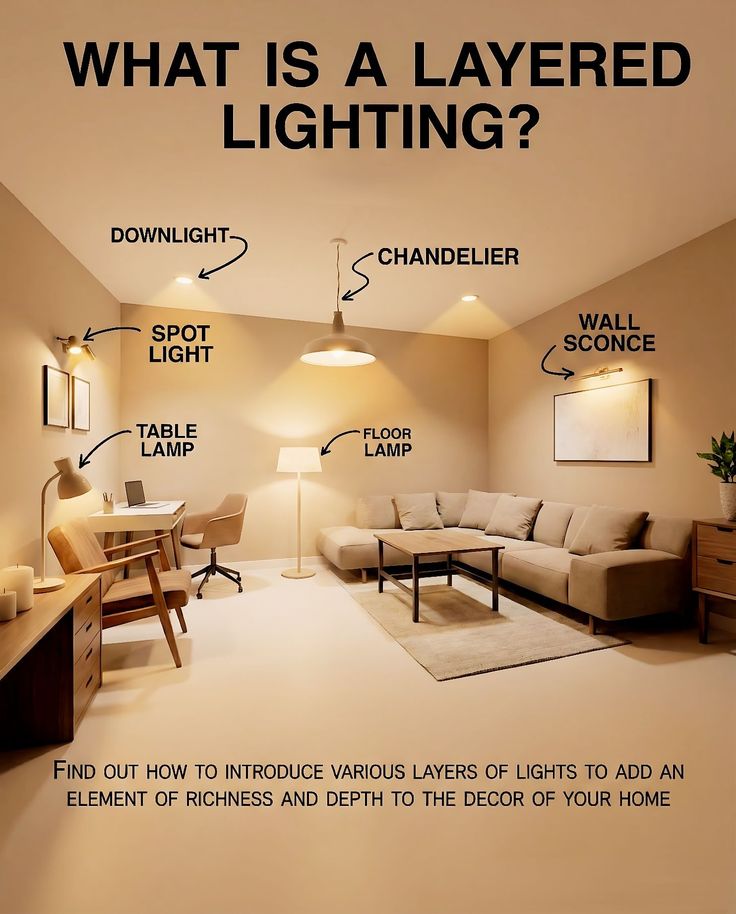
What is Layered Lighting?
Layered lighting refers to the strategic use of multiple lighting types within a space to achieve both functionality and visual depth.
Instead of relying on a single light source, layered lighting combines different layers, each serving a specific purpose.
The three main lighting layers:
- Ambient lighting
- Task lighting
- Accent lighting
Together, these layers create a complete and dynamic lighting environment.
1. Ambient Lighting: The Foundation
Ambient lighting is the base layer of illumination. It provides overall light that allows users to move safely and comfortably within a space.
Common sources:
- Ceiling-mounted fixtures
- Recessed lighting
- LED panels
- Indirect lighting systems
Key characteristics:
- Even distribution
- Soft and comfortable brightness
- No harsh shadows
Ambient lighting sets the general tone of the space. However, on its own, it is rarely sufficient.
2. Task Lighting: Function First
Task lighting is designed for specific activities that require focused illumination.
Examples:
- Kitchen counter lighting
- Desk lamps
- Reading lights
- Bathroom mirror lighting
Key characteristics:
- Directional and focused
- Higher intensity than ambient lighting
- Reduces eye strain
Without proper task lighting, even a well-lit space can feel impractical.
3. Accent Lighting: Creating Depth and Atmosphere
Accent lighting adds visual interest and highlights specific elements within a space.
Examples:
- Wall washers
- Spotlights
- LED strips
- Display lighting
Key characteristics:
- Highlights textures and materials
- Creates contrast and depth
- Adds drama and character
Accent lighting transforms a functional space into a visually engaging environment.
Why Layered Lighting is Essential
Using a single light source often results in flat, uninviting spaces.
Layered lighting provides:
- Better functionality → Supports different activities
- Visual depth → Prevents flat lighting conditions
- Flexibility → Adapts to different moods and times of day
- Enhanced aesthetics → Highlights design features
A well-layered lighting scheme allows a space to change character throughout the day.
Designing a Layered Lighting System
Step 1: Analyze the Space
Before selecting fixtures, understand:
- Room function
- User needs
- Natural light conditions
- Ceiling height
- Surface materials
Lighting should respond to the space—not the other way around.
Step 2: Start with Ambient Lighting
Establish a comfortable base level of illumination.
Tips:
- Avoid overly bright lighting
- Use indirect light where possible
- Ensure even distribution
Step 3: Add Task Lighting
Identify activity zones and provide focused lighting.
Examples:
- Kitchen → under-cabinet lighting
- Workspace → desk lighting
- Bathroom → mirror lighting
Step 4: Integrate Accent Lighting
Enhance the visual quality of the space.
- Highlight textures
- Emphasize architectural elements
- Create focal points
Accent lighting adds personality.
Step 5: Control and Flexibility
Lighting should be adjustable.
- Dimmer systems
- Smart controls
- Zoning
This allows users to adapt lighting based on time and activity.
The Role of Color Temperature
Color temperature affects mood and perception.
Common ranges:
- Warm light (2700K–3000K) → cozy, relaxing
- Neutral light (3500K–4000K) → balanced
- Cool light (5000K+) → energetic, functional
Choosing the right temperature is essential for both function and atmosphere.
Layered Lighting in Different Spaces
Living Rooms
- Ambient → general comfort
- Task → reading lamps
- Accent → highlighting walls or art
Goal: Relaxation + visual richness
Kitchens
- Ambient → overall brightness
- Task → countertops and cooking areas
- Accent → cabinets or island features
Goal: Functionality + clarity
Bedrooms
- Ambient → soft lighting
- Task → bedside reading lights
- Accent → indirect lighting
Goal: Comfort + calm atmosphere
Commercial Spaces
- Ambient → overall visibility
- Task → work or display areas
- Accent → branding and focal points
Goal: Experience + usability
Common Lighting Mistakes
Using only one light source
Creates flat and ineffective lighting.
Overlighting
Too much brightness reduces comfort.
Ignoring task lighting
Leads to poor usability.
Poor placement
Incorrect positioning creates shadows and glare.
Inconsistent color temperature
Disrupts visual harmony.
The Role of Interior Architects
Interior architects integrate lighting into the overall design.
They:
- Plan lighting from early stages
- Coordinate with materials and layout
- Balance function and aesthetics
- Ensure technical feasibility
Lighting is not added—it is designed.
Lighting and Material Interaction
Light behaves differently on various surfaces.
- Matte surfaces → soft reflection
- Glossy surfaces → strong reflections
- Textured materials → depth and shadow
Understanding this interaction enhances design quality.
Technology and Smart Lighting
Modern lighting systems offer advanced control.
Features:
- Dimming systems
- Motion sensors
- Smart home integration
- Adjustable color temperature
These systems improve both efficiency and user experience.
Practical Tips for Better Lighting Design
- Always combine multiple lighting layers
- Use indirect lighting for comfort
- Highlight key design elements
- Avoid glare
- Invest in quality fixtures
- Plan lighting early in the project
Conclusion: Light as a Design Tool
Layered lighting is not just a technical requirement—it is a design strategy.
It allows spaces to:
- Function efficiently
- Feel comfortable
- Look visually dynamic
When used correctly, lighting transforms interiors into living environments.