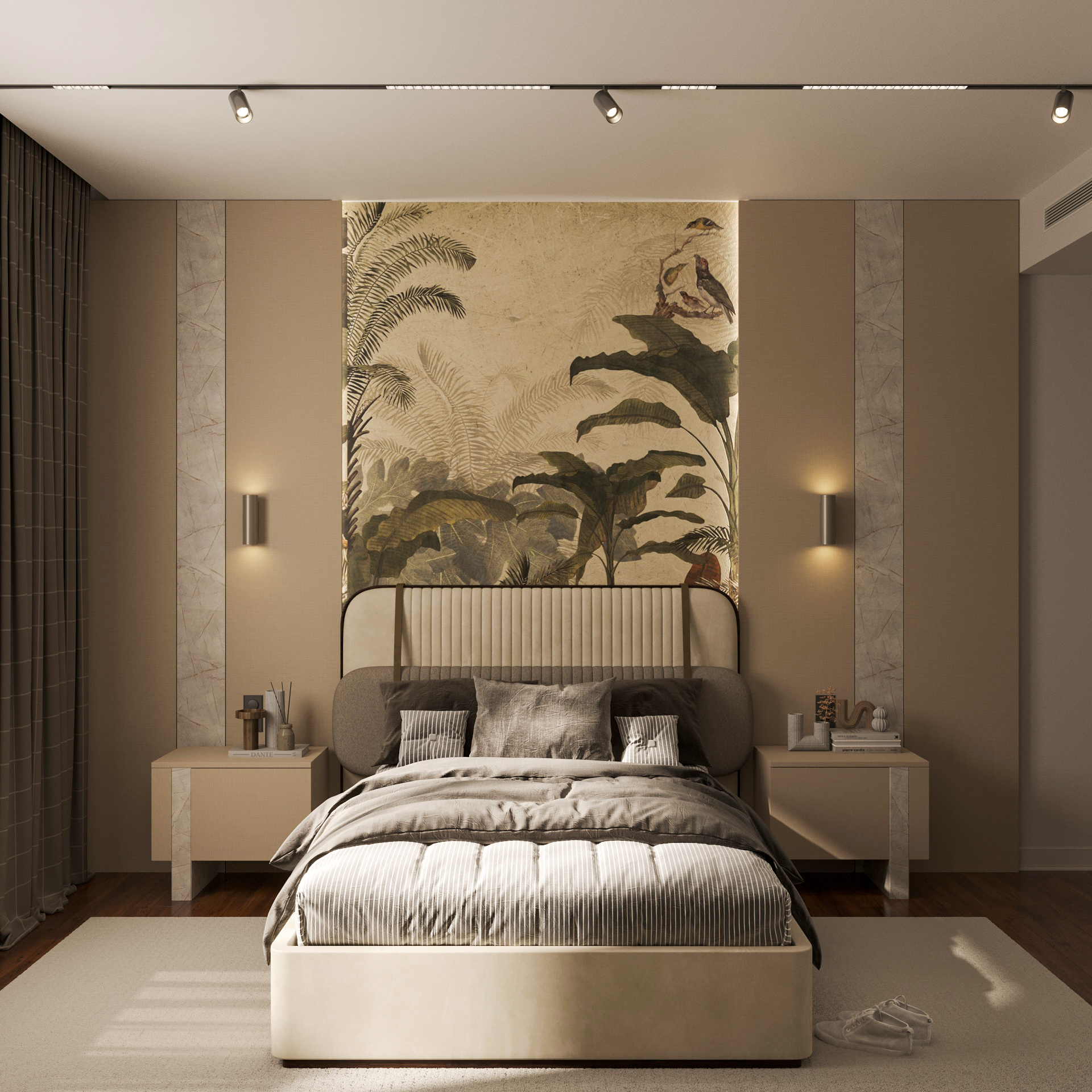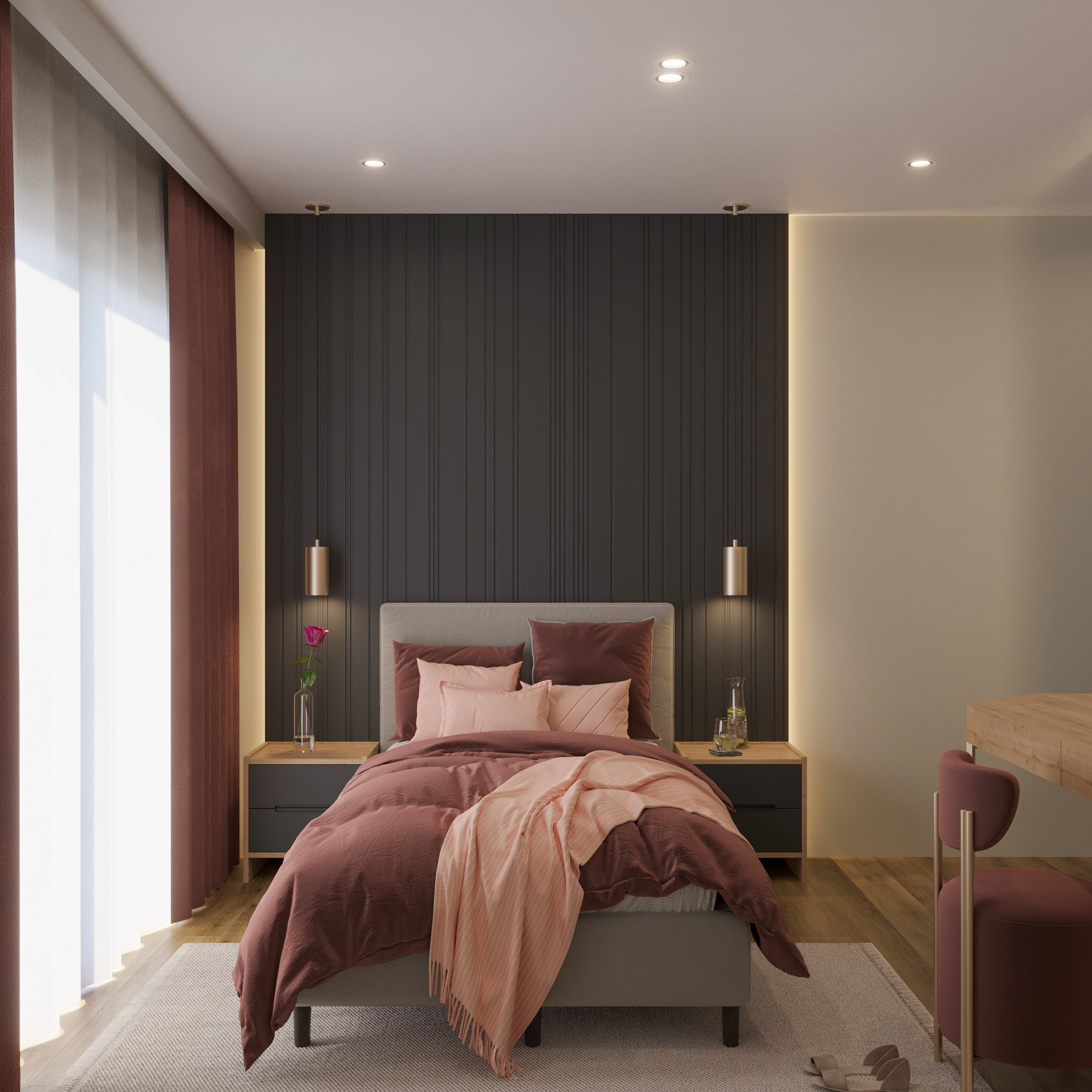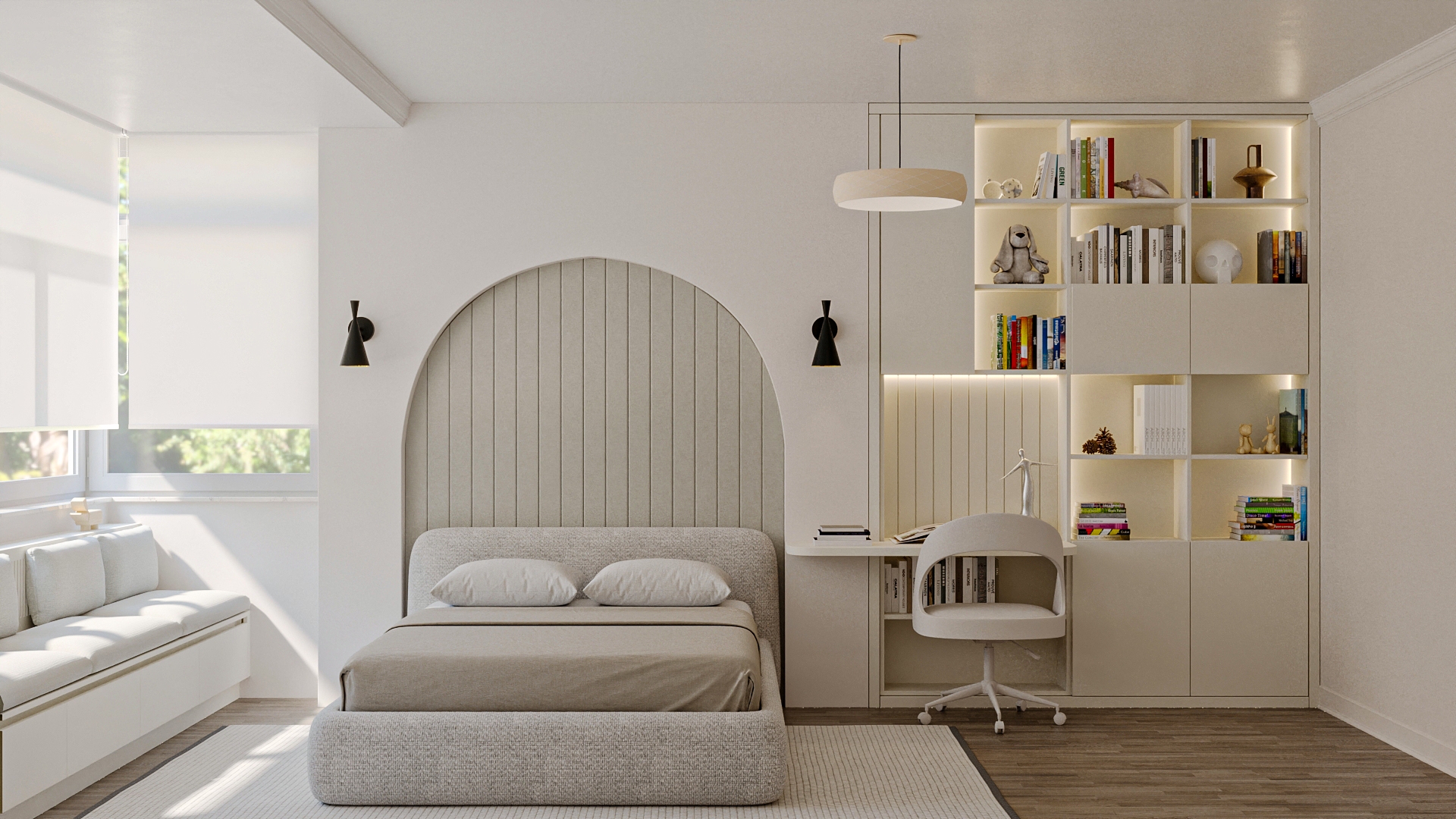
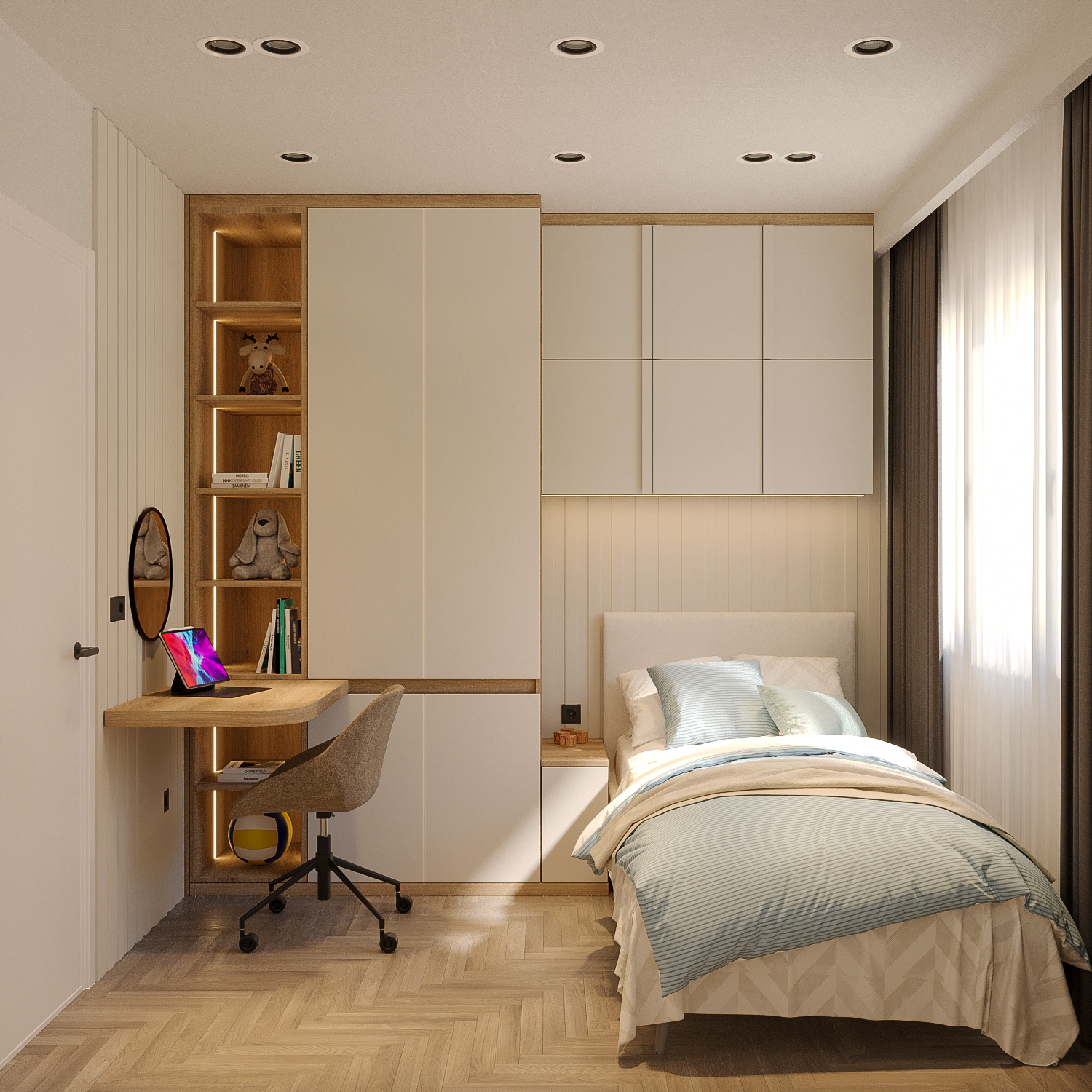
A Modern Youth Living Space Constructed Within Naturalness
This project approaches the youth room not only as a sleeping area; but as the spatial counterpart of identity development, productivity, and the need for personal space.
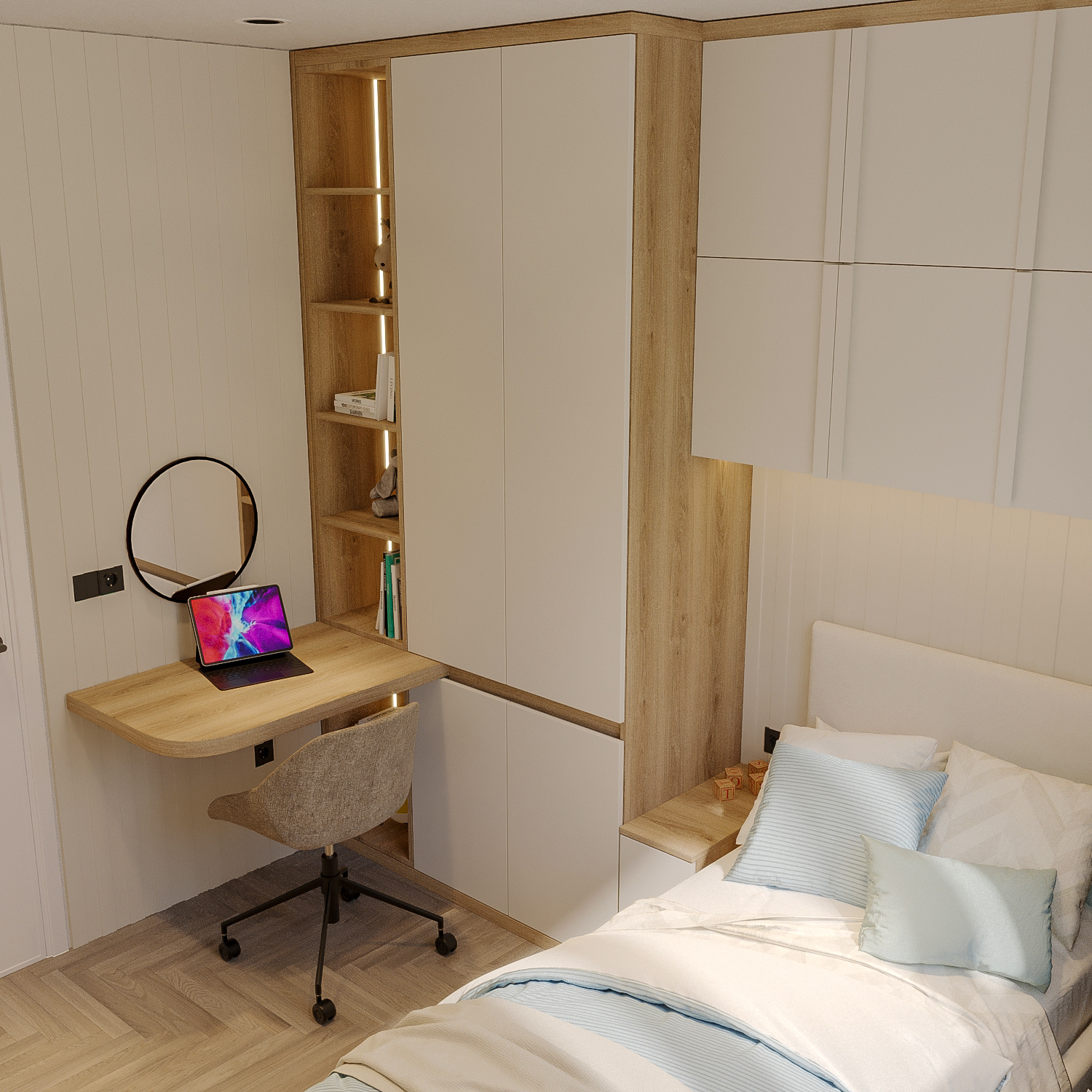
At the center of the design are oak tones. However, here wood is not only a material; it is a psychological tool. While natural oak surfaces create a calming and safe atmosphere for the young user, they prevent the space from feeling like a cold and temporary area.
Material Composition: Warmth and Balance
The oak texture is used together with flat, simple, and modern surfaces to create a balanced composition. If the space were entirely wood, it could become heavy. If it consisted entirely of flat lacquer surfaces, it could feel cold.
In this project, a conscious balance is established between two extremes:
Natural wood → warmth and character
Neutral flat surfaces → spaciousness and modernity
Soft textile textures → comfort
Thanks to this triple balance, the space gains both a contemporary and sincere identity.
Spatial Zoning: Planning That Supports Rhythm
The most critical issue in youth rooms is that functions do not overlap with each other. In this project:
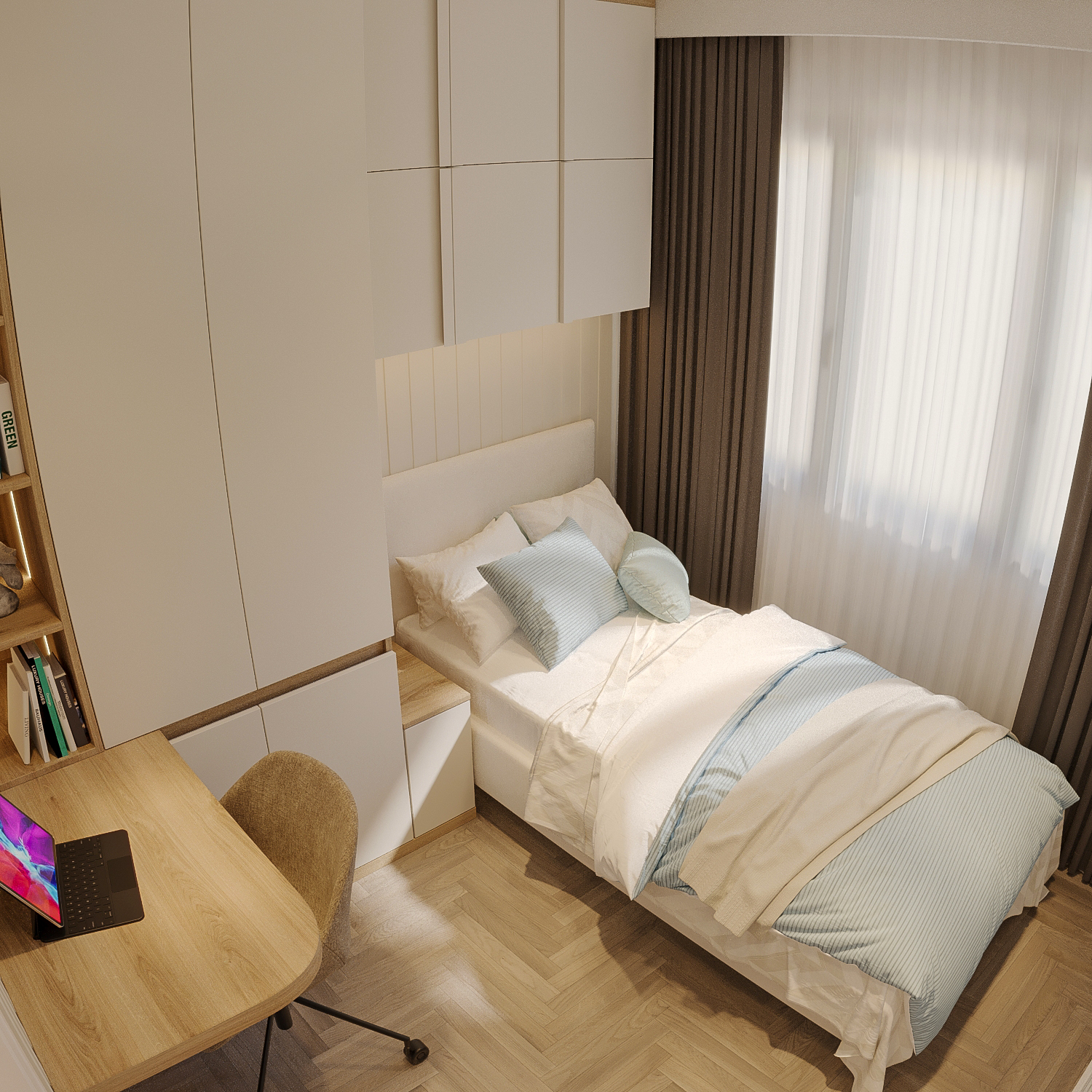
✔ The sleeping area is clearly defined
✔ The study area is cleared of distracting elements
✔ Storage solutions are integrated in a way that does not create visual clutter
This zoning supports the mental transitions of the young user during the day:
Rest → Focus → Socialization.
The space almost translates the daily life flow into an architectural language.
Geometry and Line Language
In the design, simple and clear geometries are preferred instead of sharp and complex forms. The balance of vertical and horizontal lines gives a sense of order to the space.
This order creates a subconscious perception of “control and clarity” for the young user. Especially during adolescence, having an organized personal space is important in terms of psychological comfort.
Use of Light: Natural Flow
Natural light creates soft reflections on oak surfaces. This makes the space appear lively yet calm.
Artificial lighting is constructed functionally:
✔ Focused and sufficient light in the study area
✔ Homogeneous lighting in the general volume
✔ Soft tones for ambiance effect
Here, light is not decorative but a tool that directs the experience.
Timelessness Strategy
A common mistake in youth rooms is producing short-lived designs with trendy colors and objects. In this project, a timeless language is consciously preferred.
This approach:
✔ Allows the user to transform the space as they age
✔ Prevents an overly thematic design
✔ Offers a long-term usage advantage
General Evaluation
Oak Youth Room is a balanced interior architecture composition that brings together naturalness, minimalism, and functionality.
This room is not only aesthetic;
but also psychologically safe,
functionally efficient,
and temporally sustainable living space.